Few
moments in life are actually life- changing. The big ones you can usually count
on one hand.
I was
sitting in a conference room in the offices section of my school, when the head
of the Lower School asked me if I wanted to stay. My grades were terrible, I
had virtually no friends, and was generally unhappy from my parents’ divorce
and emotional underdevelopment. I said I did want to stay, and for the next six
or so years, until I graduated in eighth grade, that spur-of-the-moment,
I-think-this-is-what-I’m-supposed-to-say answer defined my childhood through
middle school. Upon graduating I still didn’t have any friends, and my grades
were still lousy.
Out of
precaution I’d applied to eight high schools, and got into maybe three or four,
but only one gave enough financial aid. I went out and toured it – to save money
we only wanted to tour the boarding schools I’d gotten into. It seemed like a
nice enough place, but I was certainly wary. Once again, the answer was a
default, what I was supposed to say. It turned out to be a good fit, as was my
college choice, which happened in a fairly similar fashion, just opting for
what seemed correct.
Of
course, some important moments aren’t active choices. When I was offered my
first teaching job it was due to total luck. Living in Boston it was nearing
October – the school year had already begun, so I’d reluctantly started looking
at barista jobs – any kind of work that would pay me. During a phone interview
for a job in Reno, I was asked what I like to do for fun, and I replied travel;
then I expanded to demonstrate how it made me a better history teacher. Using
Turkey, and the Topkapi Palace, as my example, I got the job. The man I was
talking to, it turned out, was Turkish. I had almost chosen to talk about Greece.
During
that recession many of my jobs felt like good luck and fortune that kept me
going. Eventually, after traveling both abroad and back to the east coast, I
returned to California. The first year back, for spring break, we decided to
road trip, as a family, to help bring back my stuff that was in Boston. Outside
Little Rock we got in a terrible car crash. It would end up being one of the
most important moments of my life – swerving to avoid a car that was merging
into me. Once I’d gotten back to the Bay Area, I had a follow-up doctor’s
appointment, and that appointment led to them discovering the lump in my
thyroid.
Were it
not for that crash, the lump may have gone undetected for years. I was treated
that summer for mild hyperthyroidism, and from then on we always kept track of
my thyroid, which ended up being a good thing, because a few years later my
endocrinologist, in a routine thyroid ultrasound, found some lumps on my lymph
nodes. It turns out I had thyroid cancer, which had spread to the adjacent
nodes. I got a thyroidectomy, and a second treatment of radioactive iodine – as
I’d done for the hyperthyroidism. Since thyroid cancer is asymptomatic, and
usually found in older patients, that car crash set off a frankly incredible
chain of events that may have saved my life.
In-between
the hyperthyroidism and the cancer, though, was another transformative moment.
One day, at a faculty appreciation luncheon, I was looking for a place to sit,
and opted for a table of people I didn’t know – because there was a beautiful
young woman there. We went on our first date not too long after, and a little
over a year later we were living together, before eventually getting married.
That wasn’t even the first time a seat at a table had proven providential – my
main friend group in college was stumbled upon in the same way. By the time
they’d all introduced themselves, I thought ‘Oh my god. I’m going to have to
remember all of these peoples’ names.’ So I kept sitting with them, and years
later the guy who’d sat at the head of the table was asked to be the officiant
at our wedding.
The
choices to stay at or attend a school, the fortunate job interview, sitting
down at the right table, the car crash that led to a cancer diagnosis. Some of
these moments radiated gravitas at the time (also true of many not noted, which
at the time seemed life-altering, and turned out not to be). Others were
totally accidental happenstance. Change any one and my life would have been
radically different. I tend to have an abhorrence of arbitrariness, but I have
to concede that much of my life’s path has been, if not entirely random, not
far removed. As I continue my cancer treatment, it’s given me time to pause and
take stock of these significant moments which have defined my life, but also in
the light of their randomness, and the cosmic randomness that defines
existence, to consider what it means to live.
I often wish for a new Constitution - one which fixes the problems we're currently beset by. The original Constitutional Convention had only 55 delegates. If I
were to create a new Constitutional Convention, endowed with the power to
create a new American Constitution, here are the 55 people I would want to write it, by (rough) category:
Retired
Politicians:
Barrack
Obama, former President
Al
Gore, former Vice President
David
Souter, former Supreme Court Justice
Admiral
Michael Mullen, former Chairman of the Joint Chiefs of Staff
Robert
Reich, former Secretary of Labor
Julian
Castro, former Secretary of Housing and Urban Development
Steven
Chu, former Secretary of Energy
Janet
Napolitano, former Secretary of Homeland Security
Samantha
Power, former United Nations Ambassador, Administrator of the Agency of
International Development
Current
Politicians:
Kamala
Harris, Vice President
Sonia
Sotomayor, Supreme Court Justice
General
Lloyd Austin, Secretary of Defense
Deb
Haaland, Secretary of the Interior
Pete
Buttigieg, Secretary of Transportation
Tom
Vilsack, Secretary of Agriculture
Linda
Thomas-Greenfield, United Nations Ambassador
Bernie
Sanders, Senator of Vermont
Amy
Klobuchar, Senator of Minnesota
Elizabeth
Warren, Senator of Massachusetts
Tammy
Duckworth, Senator of Illinois
Jay
Inslee, Governor of Washington
Gretchen
Whitmer, Governor of Michigan
Pedro
Pierluisi, Governor of Puerto Rico
Ilhan
Omar, Representative of Minnesota
Rashida
Tlaib, Representative of Michigan
Leondra Kruger, Associate Justice
Michelle
Wu, Mayor of Boston
Political
Operatives and Theorists:
Stacey
Abrams, voting rights activist
Lawrence
Lessig, director of the Edmond J. Safra Center for Ethics at Harvard
Alicia
Garza, co-founder of Black Lives Matter
Angela
Davis, activist
Margaret Raymond, legal theorist
Madonna Thunder Hawk, activist
Jody Williams, activist
Labor
and Nonprofit Leaders:
Liz
Shuler, President of AFL-CIO
Cristina
Jimenez Moreta, co-founder United We Dream
Teresa
Romero, President of United Farm Workers
Alexis
McGill Johnson, President of Planned Parenthood
Susan
Herman, former President of the American Civil Liberties Union
Ben
Jealous, former President of the NAACP
Deepak
Bhargava, former director of Community Change
Van
Jones, co-founder the Ella Baker Center for Human Rights and Green for All
Sara J. Bloomfield, director of the National Holocaust Museum
I find it
odd that more pundits haven’t called the crisis caused by Manchin and Sinema by
the proper historical analogy: they are practicing Democratic McCarthyism.
In the
U.S. we often reference previous history to describe current scandals. ‘Witch
hunt’ hearkens not only the Red Scare, but also the Salem trials. ‘-Gate’ is
used for all sorts of scandals, to connect them to the gravity of Nixon’s
resignation. ‘Moon shot’, ‘Vietnam’, ‘Katrina’: we use all sorts of historical
shorthand. So why aren’t people comparing Senators Joe Manchin and Kyrsten
Sinema to Senator Joe McCarthy?
When
one Senator has outsized power, it’s a problem. We have an Executive Branch for
that. In the Legislative Branch only the Speaker or Majority Leader should have
outsized control the House and Senate. Breakaways muck up the whole works, as
we have seen time and again. Manchin and Sinema are doing that now – refusing to
use this moment to help the Democratic agenda, and blowing the best opportunity
the Democrats have had since the 2010 Tea Party midterms to actually make big
changes.
Why? No
one knows. Sinema, in particular, has decided to be infuriating on this point,
refusing to tell anyone what she wants, or why she is opposing the current
legislative agenda of the Democratic Party.
“I have
here in my hand a list of 205—a list of names that were made known to the Secretary
of State as being members of the Communist Party and who nevertheless are
still working and shaping policy in the State Department.”
How is
that infamous quote, and its spotlight-seeking intention, not clearly the same
bullshit that Sinema is doing? Get the attention – get everyone focused on her,
and keep the attention. Force us to ask her what she wants or what she knows.
It’s entirely loathsome, and is going to have devastating consequences if not
stopped. When McCarthy wasn’t stopped, it led to years of crisis – McCarthy
changed his ‘communist’ numbers frequently, including 57 and 81, and kept the
press on tenterhooks. From this unofficial power came the dreadful, and
historically shameful, trials.
Sinema
and Manchin will have devastating consequences for the opposite reason: neither
is likely to be in power in a few years, especially Sinema, who trails the
other Democratic Senator in popularity in her home state. What Senators Manchin
and Sinema have chosen to block are widely popular, and clearly beneficial,
social programs. Paid family leave. Universal pre-K. Infrastructure hangs in
the balance. Tackling climate change. Expanding Medicare to cover dental and
vision.
Presumably,
in the midterms, the Democrats will take a drubbing. That’s typical. That’s
also only a year away, one year until Biden’s agenda is foiled in either the
House, Senate, or both. (It could be offset by passing popular legislation, but
that’ll only do so much.) It’s also a best-case scenario: what happens if one
of the octogenarian Senators dies between now and next year?
So
pressure is on to get this shit done. This isn’t even the emboldened agenda that
some folks hoped for: the John Lewis Voting Rights Act seems unlikely to be
passed, the end of the filibuster is inexplicably as distant as ever, the
statehood of Puerto Rico and/or D.C seem to be non-starters.
Manchin
and Sinema care as much about debt and the price tag as McCarthy cared about
communism – not at all. They don’t give a damn. Democrats can disagree on
things, and Manchin already sticks out with things like not supporting abortion
rights. But not wanting to lift people out of poverty, and support working- and
middle-class Americans? That’s what they’re blocking by refusing to sign on,
and one would think it’s the very least to expect of a member of the
Democratic Party. But Sinema and Manchin (who both voted down the minimum wage
increase) clearly don’t give a damn about the people: just their campaign
donors, the wealthy corporations, who will fight to keep them in power. In the
spotlight.
As Ezra
Klein pointed out in
his insightful article in today’s Times, the Democrats are very unlikely to
remain in power much longer, almost certainly not by 2022. If Manchin and
Sinema screw this up they’ll convince a generation of voters that Democrats can’t
get anything done even if they are in power – and they’ll be right. The Senators’
narcissism and need for attention is going to devastate this nation: the same disastrous
way McCarthy’s did.
There
are two major works of philosophy in the 20th century: Heidegger’s
Being and Time (Sein und Zeit), published in 1927, and Wittgenstein’s Philosophical
Investigations, published in 1953. The first is the magnum opus of
existentialism – a culmination of phenomenology (the study of experience and
consciousness) and ontology (the study of being). The latter launched the field
of language philosophy.
Of
course, outside of these two massive fields, there were other philosophical
trends. Postmodernism, represented by Foucault, and deconstructivism,
represented by Derrida, both were important philosophical breakthroughs – but arguably
both arose only because of Wittgenstein’s pivot to focus on language. (Other
philosophers and movements certainly made breakthroughs in the 20th
century, in areas such as political philosophy with the important work of John Rawls.)
Heidegger’s
existentialism is difficult – harder to access than either his 19th
century forerunners, such as Nietzsche, or his successors, such as Jean-Paul
Sartre. Being and Time is an incredibly challenging work to read, but its
general ideas, vastly oversimplified, are as follows:
We are
Dasein – “being-in-the-world”. Dasein is an apparently unique experience to
human beings: our existence presents problems of identity, as does our constant
engagement with the world (including other people) around us. Our being is not
distinct from our world in which we live – in which we are thrown into without
any choice or initial understanding. How we make sense of our self, and how we
make sense of our world, are therefore fundamentally linked. That is why we are
“being-in-the-world”.
When we
are living “authentically” we are confronting Dasein – but most of the time, it
seems, we aren’t really engaged in such existential awareness. A nice example:
I am walking down the street, and I notice a friend walking towards me. My mind
goes to my experiences with this friend, memories, feelings, context. My mind
is now “far away” from what is actually happening to me, walking down the
street. I’m focused on someone further away, and on a time that maybe has
passed or is yet to come. Our experience of the world, therefore, is
infrequently focused on the here and now in such a way that supersedes other,
more “distant” thoughts and concerns. If it were otherwise, and what was
proximate to us demanded our attention here an now, think of the result: Seeing
my friend approaching would not be as important, due to their lack of immediacy,
as the socks on my feet, which are, after all, much closer to my experience in
that moment!
But we don’t
think about our socks in that scenario. And that is actually very
interesting, and important – there is insight in that observation of how we experience
the world, and what it means to be a human in this world.
Like
other existentialists, Heidegger’s focus on being also is interested in death,
and how our “beings-towards-death” is the source of meaning in our lives. My existence
is not just defined by being thrown into this world, but also from the inescapable
fact that I can’t stay forever – that I will die, and cease to exist.
***
When I
read Being and Time in a philosophy course dedicated to the tome my senior
year, I had a question, which I asked a few different times: “But what about
children?”
As an
adult I think Heidegger’s description of our lived experience is fairly spot-on,
as shown in the sock story above. We walk through life with our minds on other
things, rarely focused on our existence in the moment, in that place and time.
Our experience of life is defined by our death. Being “thrown into” a world
which we have to make sense of – that is very true, but also very much a focus
of developmental psychology. I think Heidegger is right, that an in media
res understanding is how we all must take the world around us. Yet a child’s
understanding, and sense-making, of the world is fundamentally different from
an adult’s. They experience life fundamentally differently, and, therefore,
there must be an element of becoming, or developing into, Dasein.
I was,
at the time, taking classes on child development and psychology, pursuant to my
studies in education and in preparation for my career in teaching. Throughout
college I took at least one philosophy course per term: Existentialism, Ancient
Greek, Leibniz and Hume, Philosophy of Religion, Wittgenstein, Kant’s Critique
of Pure Reason, Theoretical Ethics, Logic, and Heidegger’s Being and Time. But
the papers I was reading in psychology and child development were equally as
fascinating. And, as Piaget had begun to realize, by the same time Heidegger
was writing in the 1920s, children’s brains are not like ours. They do not make
meaning the same way. Arguably, then, they are not Dasein – that Dasein is something
we become with age. The meaning in a child’s life is not based on their
appreciation of mortality. Children – quite often – do focus more on their
socks than their approaching friend.
Philosophy,
as far as I can tell, has typically avoided the ontology or metaphysics of
childhood. Certainly, the big names, from Socrates to Descartes, Hegel to
Rorty, didn’t seem to spend much time considering how children understand and
make sense of the world. There are great exceptions – epistemology, studying
how we know and make sense of the world – sometimes considered in the context
of education, as seen in Plato and Rousseau.
Generally,
though, the existentialists seemed unmoved by childhood – that state that,
along with adolescence, encompasses roughly a quarter of the average life-span.
Perhaps the psychologists, with their various theories of understanding, under
the title ‘cognitive development’ – such as Piaget, Vygotsky, Montessori, Erikson,
and the behaviorists – had taken care of all that.
This is
a shame, because the lived experience of most people is of a sea change in our
ability and means by which we make sense of our world. Our awareness of this
process, deeply tied to awareness of our self and identity, and comprehension
of what it means to exist, begins to really take hold in the years transitioning
from childhood to adolescence. While we have a sense of our selves, and our
world, prior to this time – one which has undergone numerous critical
developments since our infancy – this age’s deepening sense of identity and
vastly broadened horizons is, in some sense, the first tentative steps into
Dasein.
And
that experience, that is so fundamental to our lives and our existential
experience, is why Adventure Time is one of the most important documents of recent
popular culture.
***
In
2019, The New York Times made a list of the 20 best television dramas since The
Sopranos. On that list: Lost, The Wire, Mad Men, Breaking Bad, The Americans… and
Adventure Time. From an excerpt of their reasoning:
“The
story of Finn, a foundling in the magical and once-devastated Land of Ooo,
“Adventure Time” evolved from a whimsical action-adventure into a sprawling
story of abandoned children, surrogate families and self-discovery. It grew up
as its protagonist did, teaching its viewers that while the battle of good
against evil can be thrilling, it’s rarely simple. It had the vast,
well-imagined cast of a saga like “Game of Thrones,” along with a stunning
visual language and a through sense of empathy.
“If you
still need convincing, let me direct you to the Season 4 episode “I Remember
You,” which begins to reveal the back story of the series’ original mad
villain, the Ice King. Once a mild-mannered human named Simon, he saved a young
girl (now Marceline, the goth-punk vampire) by embracing a magic that took his
sanity and memory. As Marceline pieces together the story and he grasps at the
fragments of his past — a story with familiar echoes to anyone who’s seen a
loved one fall to dementia — the episode’s 11 minutes build to an emotional
climax, a villainous character reframed and given depth on the spot.
Surreal,
wise and often heartbreaking, “Adventure Time” may look like kids’ stuff. (It
is, in fact, outstanding kids’ stuff.) But under its confectionery surface lies
the material of great drama. It’s a wonderland of broken, misfit toys learning
to fix one another.”
All of
that is true, but it buries the lead – “it grew up as its protagonist did”. And
this is really interesting, because I know of only one other drama that charts
that process of development as its focus: Richard Linklater’s Boyhood. But,
unlike the 2.5-hour 2014 film, Adventure time slows down, focusing on episodes
of Finn’s development from the age of twelve to seventeen, those same key years
of becoming Dasein.
Dramas
rarely have ‘filler’ episodes – in which nothing happens that develops either
plot or character. But Adventure Time is comfortable, and very clever, with
this. Lived experience does not follow a narrative dramatic story arc – so neither
does Adventure Time. Finn’s experiences are sometimes incredibly meaningful,
and sometimes entirely pointless, and sometimes seemingly pointless, but
meaningful later on. The show does this again and again – showing you
things which they don’t explain, or hint at, or leave in the background until
later. The importance of characters waxes and wanes, in often unpredictable
ways. Think back to your own life: Five years ago, would you have predicted you’d
be where you are now? That the people in your life would be the people who are
important to you now? Were the major turning-points, in hindsight, identified
by you at the time? Even in the final season there are seemingly pointless
episodes, because of course there are! That’s how the course of life runs.
As Finn
develops, his understanding mirrors ours, and how he makes sense of his world
develops, too. As a tween he runs around and sees things as simple adventures –
good and bad, scary and comforting – some things being too confusing for him to
make sense of, so he doesn’t try (while we, the audience, start to learn to
sock those elements away for later). As he ages, he starts to learn the history
of his world, the history of the people around him, and his own place and story
– just as we do. All the two-dimensional characters get fleshed out, and his
horizons expand. His maturity drives the framing, narrative, and context – in this
case what the animated world presents to us, as the viewer. Episodes from the later seasons would be totally out of place earlier on, because Finn, developmentally, wouldn't have experienced the world like that yet. The example given by the Times shows this: As Marcy and Ice King figure out their painful, complicated, past, Finn and Jake look on in bewilderment. The last lines have Jake ask: "What is going on in there?" To which Finn honestly replies: "I have no idea." But he will - when he is older.
***
Most shows
geared to young people are age-specific. Daniel Tiger, Arthur,
Transformers, Sesame Street, Yogi Bear, and so forth. Blue’s Clues and Dora the Explorer were
designed for a certain audience, just as Teenage Mutant Ninja Turtles and Lizzy
McGuire were. So often, the characters are ageless – or only progress a few
years in time between start to finish, most commonly in shows geared to adolescents.
A show
that aged appropriately with its characters, was, by itself, a major
breakthrough. Further, Adventure Time covered new, interesting, developmental
ground. For one of the first times ever, in popular culture, if not the first, it charted how we become aware
of our existence as Dasein, and how that awareness evolves, doing so in a way that mirrors
lived experience. It managed this insight with humor, drama, creativity, all while tossing in some
truly intriguing philosophical concepts. As such, as the culture of our time is passed
on, Adventure Time should be treated as a major artifact – a critically
important document of how we as a culture in the early 21st century made sense of our being.
It’s
not a novel thesis to say that mediums change content. But I wanted to examine
that idea in the light of comedy performance.
Ignoring
the vast realms of visual and written comedic works – for which, of course, the
same thesis applies – formal performance comedy begins, I suppose, with
theater. The works of Aristophanes are specifically linked to the theater
medium, as seen best in The Clouds, when the play’s author walks on stage and
argues with the audience.
For
centuries, comedy performance was relegated to the stage, from Juvenal’s
satires, to Italian opera buffa, to Oscar Wilde. All of this comedy was
subsumed under the category ‘theater’ however. The only other performative
comedy was comedy songs – a tradition that was anything but formal. While La
Donna e Mobile may have enchanted Verdi’s audience, most comedic songs were
more at home in taverns and were generally regarded as informal entertainment,
not far removed from an American hootenanny.
Entering
the 20th century, radio and recording technology began to change all
this, along with the advent of film. Comedy song, in particular, made a big
leap, as you could now buy comedy records – initially humorous songs, and
eventually 45s. Already by the 1920s artists were professionally recording the
previously informal songs about moonshiners, cuckold husbands, and other
classic tropes. Radio, meanwhile, is where the first situation comedies arose –
consider Fibber McGee and Molly, which began broadcasting in 1935. A few years
into the show there was the now-iconic audio joke of opening the hall closet,
only to have the foley artist’s mountain of sounds fall out and bury the luckless
door-opener. How many times has that joke been referenced in American comedy
since?
A
later, televised, version of the gag
Besides
sitcoms, radio also provided more general radio shows. Les Paul and Mary Ford,
by 1950, were recording musical comedy sketches, but this tradition goes back
to the 1920s, and vaudeville. Burns and Allen had made comedy films since 1929
(notably Lambchops) and performed on the radio starting the same year, becoming
regulars in the mid-30s.
George
Burns and Gracie Allen bring their vaudeville routine to film in 1929
Vaudeville,
basically, was where stand-up comedy started, alongside variety shows and
revues, such as the Ziegfeld Follies. The growth of vaudeville was a decades-long
process, from local concert halls in the mid-1800s to national fame by the
turn-of-the-century. Some of these later comedians, like Burns and Allen, Eddie
Cantor, WC Fields, Will Rogers, and the Marx Brothers, made the jump to the new
formats, like film and radio. But film was already quickly developing its own
rules. Movies were replacing comedy nickelodeon shorts, and silence didn’t lend
itself to standup, anyway. Buster Keaton, Charlie Chaplin, the Keystone Kops –
these films were embracing what you could do with a camera, and were a far cry
from the stand-up performances given on stage.
Television
helped resuscitate stand-up comedy. Of course, sitcoms were copied from radio,
but variety shows and late-night television emerged quickly, already in place
by the 1940s. Hosts like Bob Hope and Milton Berle ushered in this new comedy, with
proper late night, as a platform for standup, emerging in the 1950s. Here was
the new comedy performance stage, presented in a way that worked well for
introducing Borscht Belt humor to America. By the late 1950s standup had found
a television home, and, with mass audiences, new cultural relevance and power.
Bob
Hope roasting Frank Sinatra in 1950
Simmering
in the background of all this was the continuing development of comedy songs.
In 1948 the LP had been introduced, and so novelty songs gave way to
full-length comedy albums, initially comprised of songs, such as Tom Lehrer’s Songs
by Tom Lehrer in 1953. Spoken comedy followed, with the first live comedy
album in 1958, recorded by Mort Sahl.
A song
off of Lehrer’s full-length album
Soon
comedy albums hit their stride – in the early 1960s comedians like Bob Newhart,
Vaughn Meader, and Stan Freberg made popular full-length spoken comedy albums. Comedy
songwriting, now blended with standup elements, continued with the works of
performers like the Smothers Brothers – who eventually, like Newhart and the others,
also jumped genres to television.
Newhart
and Dean Martin in the 1960s. Standup comedians began working in the sitcom and
sketch format that leant itself so well to television.
‘My Old
Man’ parodied by the Smothers Brothers in the 1960s
Within
these two mediums, LPs and television, standup comedy flourished for decades.
Boundaries were pushed, counterculture embraced. Some acts were improvisational
(Firesign Theater), some captured live audience energy (Steve Martin’s 'A Wild
and Crazy Guy'), others were carefully rehearsed monologues. Richard Pryor, in
the 1970s, presented the next big leap forward, with his concert movies. By the
end of the decade HBO began making George Carlin standup specials. These merged
into a form of standup performance that came to dominate the next twenty years.
A
famous scene from Pryor’s 'Live on the Sunset Strip', 1982
By the
1980s radio was a largely defunct medium, but television soldiered on,
providing late night as a standup haven. For comedy musicians, the MTV decade
was a blessing – this was the era of Weird Al’s stardom with his parodies and
parody music videos.
Eat It,
1984
The
next big innovation, in terms of medium, was with the internet, although its role in
performative comedy was actually fairly slow, given that audio and video were
so demanding for 90s-era computers. Basically, then, it’s the advent of YouTube,
in 2005, that ushers in a new era of comedy performance, blending video and
film techniques to provide comedy material. That said, YouTube – which was
great, not incidentally, great for comedy songs – remained mostly a skit and
sketch venue.
2006 – ‘Shoes’
by Liam Kyle Sullivan. An early iconic YouTube song/skit.
So,
too, with the other popular video apps that emphasized short bursts of
observational humor: Vine from 2013-2016, and TikTok, which launched a year
after Vine’s demise. Comedy and standup specials were still largely relegated
to HBO and Comedy Central, but a new platform emerged from the internet to
help, and help transform: Netflix.
In 2012
Netflix launched it’s first exclusive special, Bill Burr’s ‘You People Are All
the Same’. Initially, Netflix was just a new home for concert-style comedy
specials. But an older tradition of comedy began to merge with standup
specials: the one-person show.
One-person
shows have been around for ages, developing a niche in the world of theater.
Hal Holbrook, famously, created Mark Twain Tonight! in 1954. Lily Tomlin found
success in the 1980s with The Search for Signs of Intelligent Life in the
Universe, written by Jane Wagner. In the 2010s comedians like Colin Quinn
carried on the tradition, with shows like Long Story Short, written by Jerry
Seinfeld. It was shown on HBO – a rare honor for these usually Broadway-bound performances.
An
excerpt from 'Long Story Short', regarding Canada
The
tradition, in theater, continues. Heidi Schreck’s Pulitzer-shortlisted 2017
play ‘What the Constitution Means to Me’ is a fine example: but on Netflix it
began to merge more with comedy. 2017 also saw Hasan Minhaj release ‘Homecoming
King’ which was part one-man show, and part comedy special.
From 'Homecoming King'
This
was a banner year, because 2017 also saw the release of Hannah Gadsby’s ‘Nanette’
on Netflix. Here was what appeared to be a concert movie, but which took a wild
turn into raw, vulnerable, performance. Gadsby pushed the boundaries of what a
standup special was, just as Minhaj had, but in a very personal, very
challenging way.
From 'Nanette'
These
lines continued to blur when, in 2020, Dave Chapelle released ‘8:46’ directly
to YouTube. Filmed during the pandemic, and shot outdoors, it’s hard to
classify it as standard standup. There’s a lot of real rage and pain in the
work. There are jokes, but they seem almost auxiliary. Here is a further step past
‘Nanette’ even, into the realm of personal struggle, anger, and hurt – while still
being a performance that, on the surface, looks and sort of feels like standup.
Tackling
these subjects isn’t new, of course. Pryor, Carlin, Hicks, CK – this sort of
introspection mixed with commentary and tinged with anger and/or depression has
been around a long time. But now it was as though the medium of a standup
special was being used to monologue and chasten, to wake people up, or just to
express their pain. (Gadsby addressed this in her 2020 show ‘Douglas’.)
Clearly, standup comedy is in an unusual place.
Netflix/YouTube’s
8:46, in its entirety
And
then along came Bo Burnham.
* * *
‘Bo
Burnham: Inside’ is something new. In the Netflix special all the concert
elements are stripped away – because he’s stuck inside. Just as we all were during
the pandemic. Burnham has to deal with this new reality in a way that’s still a
comedy special. Blending the emotional honesty and rawness of Gadsby and
Chapelle, and the one-person show aspect in a non-traditional special, Burnham
provides a truly remarkable experience. Seemingly cobbled together (but
meticulously edited) over a period of more than a year we watch Burnham’s hair
and beard grow, his adeptness with technology increase, his mental
deterioration, his challenges confronted.
For fifteen
months late night hosts have complained, like Stephen Colbert and Seth Meyers,
about doing a show without an audience. But for standup, this experience of
loss provided a whole new field of material for Burnham to explore, which he
does on ‘Inside’. Loneliness and isolation, the dark side of technology, mental
health, the need for audience approval – all had been covered before in
standup, in a joking way. That said, you can’t actually convey these concepts very
well in front of an adoring, sold-out concert hall crowd. But stuck inside a
room for a year you can. Burnham makes this clear right from the start, as he
focuses on what it means to perform for just a camera lens. Each of these heavy
themes now becomes all the more apparent due to our witnessing the actual lived
experience of them. This isn’t standup storytelling – this is standup viewing.
I never
had watched Burnham before, and had ignored his comedy career in the early
2010s. It’s a style of comedy that focuses on music – and the songs of ‘Inside’
are superb. This sounds like Tim Minchin’s best comedy music, only a little bit
better, and deeper. The songs are where he parodies our times: sexting, Instagram,
internet addiction, and so forth. The many interludes between songs show us the
deterioration and struggle (although this is present in some of the songs as
well). The final layer is a different type of parody, where he searingly makes
fun of common videos – reaction videos, watching people do playthroughs on
services like Twitch, and the like. All of these layers merge into an
incredible document of our times.
Welcome
to the Internet, from 'Inside'
Will
this special, ‘Bo Burnham: Inside’ stand the test of time? Some of the great
milestones of comedy are terribly dated now – relics that we watch or listen to
as epitomizing a moment. Meader’s comedy LP ‘The First Family’ won the Grammy
for Album of the Year – lampooning the Kennedys. After Dallas, his career, and
his album’s fame, were over. Comedy that’s focused on the zeitgeist and trends
has a short shelf-life. Lenny Bruce is too much of a hipster to watch today, as
is the topical humor of Mort Sahl, or the increasingly-stale stoner jokes of
Cheech and Chong.
Lenny
Bruce being hip in 1965
Will Burnham’s
references to sexting and YouTube ensure that his performance not last? I don’t
know. But whether or not we’re watching ‘Inside’ in thirty years, it’s still a
worthwhile special for right now. We all experienced ‘Inside’ to differing
extents, during the pandemic. I think ‘Inside’ is likely to become the
definitive statement on life during this particular moment in time, the strange,
reflective, and deeply troubling, start of this new decade. And it is, undoubtedly, one of the more interesting developments in the long story of how medium changes content.
Let's end this tour with a lighter moment from the show
Roughly
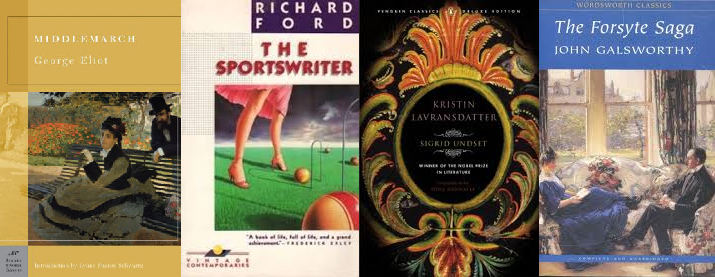
a decade ago I read Middlemarch, and immediately understood, having just
completed The Brothers Karamazov prior, Woolf’s famous description of Eliot’s
novel, as “one of the few English novels for grownup people.” Really, the
descriptor isn’t limited to the English, though – Middlemarch is one of the first
grownup novels in any language. Karamazov was published later, and remains
an enjoyable, but decidedly adolescent, work – full of the Sturm und Drang and
heady philosophical ideals of youth. Having read it just before Middlemarch,
the contrast between the two books couldn’t be more stark.
There’s certainly a place for such
works, and shelf space should be reserved for Karamazov and its brethren – the
novels of Camus, Celine, Doblin, Kafka, and Orwell, among others. But certain
books are best read before 30, and philosophical novels, and philosophy
generally, should predominate in those intellectually formative years.
However, since life doesn’t, in
fact, end at 30, a different sort of novel has to sustain us for the majority
of our lives, and, for those seeking serious intellectual stimulation (as
opposed to “mere” entertainment), that brings us back to the novels for
grownups, such as Middlemarch (or Woolf’s own works: Mrs. Dalloway, To the
Lighthouse).
When I read Middlemarch, at 25, the
character that jumped off the page was the noxious Casaubon. He was utterly
loathsome, provoking the same response as Dickens’ Uriah Heep, but, even more
revolting, dared to be a fully-fleshed character, and not a mere Dickensian
caricature. Casaubon wasn’t a scraping sycophant, but instead a bitter,
frustrated, jealous miser of love, whose last act before dying is to create a
vicious will against his young wife, with the intent to shame and hurt her for
the rest of her life.
So it was, for the past decade, that
Casaubon was my go-to for bad husbands in literature.
Unintentionally, however, for the
past six months, I’ve encountered a slough of terrible, fictional, husbands.
Consequently I thought I’d consider them here, especially in light of the fact
that, also during the past six months, I’ve gotten engaged. Good time to take
stock.
When I pick up a book I don’t want
to know anything about it. Usually I read the first few sentences, and decide
from there. Occasionally I’ll pick a work because I feel like it’s the right
time, or prioritize a book I’m not interested in, but that’s on my shelf
regardless. There’s an aspect of delayed gratification: I’m going to read this
low-priority novel first, and then the one I really want after. That delayed
gratification is how I came to The Sportswriter, by Richard Ford, which I was
not excited for.
To be fair, the main character in
Ford’s novel, Frank Bascombe, is a divorcee, not a husband. Bascombe is
intellectually dishonest, delusional, and a hypocrite who blames others for
faults he is blind to in himself. Really, it’s not all that surprising he’s
divorced. His myopic self-centeredness and hangdog self-pity make him tiresome
and unpleasant company for a few hundred pages.
After what I had assumed would be
light fare, I polished off The Sportswriter, and moved to heavier, more
enjoyable, stuff. Two of the heaviest novels I began to read were both by Nobel
Laureates, and both bricks. Tackling these tomes would take months.
Unwittingly, too, though, both would be examples of bad husbands in literature.
First, Norwegian author Sigrid
Undset wrote an 1100-page magnum opus called Kristin Lavransdatter. Set in
Norway in the medieval 1300s, it’s a vast story of a woman’s life told in three
parts: her youth, her middle age, and her autumn years and death. But the great
challenge of her life (beyond the novel’s central themes regarding Catholic
guilt and sin) is her husband, Erlend. Circumstances transpire to create a
standoff between Kristin and her husband, and Erlend, in his stubbornness and
selfishness, screws up everything about their life, wasting their chances for
happiness. His hubris is his unrelenting convictions: at one point it nearly
gets him killed, solely out of pride, while managing to lose his estates and
wealth; at another juncture it leads to him losing his child; at a third his
wife is dishonored and is going to be exiled or executed before he gives in, at
the last moment, to try and save her.
As Dorothea suffers Casaubon,
Kristin suffers Erlend – with the primary difference that she, Kristin, deeply
loves Erlend, and vice versa. But their affection for each other only makes
Erlend’s stubbornness worse, denying them the happiness they could and should
have had together. Near his death, when Erlend finally gives up his tiresome
moral high ground and ends the standoff, his realization comes with the same sort
of tragic insight as Alec Guinness’ Col. Nicholson, in The Bridge on the River
Kwai, when he exclaims, “What have I done?” But, like Nicholson, it comes too
late for Kristen and her husband.
While I was reading that tale, I
began a different novel, again, unwittingly continuing the Bad Husband Parade.
This new entry was by British author John Galsworthy, namely his lengthy novel
cycle The Forsyte Saga, for which he was specifically awarded his Nobel
citation. Unlike Undset’s Kristin, however, with Galsworthy our main character
is the bad husband in question, the despicable Soames.
Galsworthy writes with irony, and
clearly is no fonder of Soames than we are. The purpose of his work is to
critique middle class Victorianism, and the petty bourgeois with their
obsession over property. Soames takes property, and the mania of ownership, to
a disgusting conclusion, namely the ownership of his wife, Irene. She separates
from him after he rapes her, yet, a decade later, he feels as if he still owns
her, and is owed a son. Spending time with Soames, who wanders around London in
a miasma of middle-class propriety and self-righteousness makes you mighty glad
to have been born long after Victoria’s reign.
Three novels, then, in six months,
all dealing with wretched husbands. After this Casaubon is no longer alone in
my mind as the sine qua non of lousy spouses: he has become merely the central
figure in a larger pantheon of terrible partners. Erlend, Soames, and Bascombe
– the cause of their hubris varies with each. Soames suffers from an obsessive
need to possess. Bascombe is blind to his own egotism, and instead considers
himself humble and virtuous. Erlend is well aware of his faults, but too proud
to sacrifice his ideals, spreading misery, heartache, and hardship.
From this accidental survey embarked
upon during my period of engagement, we’ve really only gained further examples
of what most people have known all along: that all these bad husbands (and for
that matter bad spouses of any gender) have the same problem, namely,
selfishness. While in manifests in different forms with each, selfishness is
the primary flaw for the jealous Casaubon just as it is for the possessive
Soames. Inflated self-worth defines both Bascombe and Erlend. If there is a
warning to be taken from the Bad Husband Parade, it is that, in any romantic
partnership, you must put your relationship, and your partner, before yourself.
Fail to do so, and, besides inviting predictable romantic unhappiness into your life, you will
also find yourself defying the prudence and wisdom of the grownup writers.
So, since we weren't able to go to theaters, we watched this year's Oscar-Nominated Animated Shorts on a screen in our home. It was a bit less fun, of course, but the contents were still good.
Our local indie theater didn't make it through the recession, closing back in November - which was a shame. The Osio in Monterey, CA was a great little spot. Hopefully something opens in its place, or it reopens, so that we can do this in person next year.
Anyways, here are the nominated-shorts. Spoilers, of course.
Burrow
This was the Pixar offering. The rabbit wants to build a burrow, and learns the value of having neighbors. I thought it was fairly boring, and not as cute as other recent Pixar offerings - there's no real character development.
Genius Loci
I liked this a lot. The main character is struggling, and we are left wondering if she's having mental problems, drug use, or something else (until the end, which is admittedly still a bit vague). The artwork is beautiful, and there are nods to modern artists like Kandinsky, Chagall, and Picasso. I really thought this was going to be my favorite.
Opera
I don't know what this hot mess was. It was interesting, I guess, but overwhelming - maybe I'd have enjoyed it if I was able to explore it and interact with it? As it was, it felt sort of like a glorified screensaver. I think I figured it out, but only by accident.
If Anything Happens I Love You
This. Destroyed. Me. And by God, it had better win. Rarely has a work of art had such a crushing emotional impact as this animated short had on me. You should watch it. It's on Netflix. This is why we make art: to make you feel something.
Yes People
After weeping, this was a nice palate cleanser. But, on its own, these Icelandic apartment-dwellers are really nothing special. Again, the characters are two dimensional (at least figuratively) and there's basically no plot. A few amusing moments though, which none of the others had.
And there you have it, that's this year's crop. Even if one of the weaker offerings wins, there aren't really any bad ones. Three of them are *fine*, and one is Great, and one is Phenomenal. Seriously. Go watch it!
As always, there was a Highly Commended section that followed, comprised of the following three shorts:
Kapaemahu
This was a rather pretty short, with really nice visuals. It told an interesting little story, based on a real site and its legends in Hawaiian mythology and culture. Could have replaced any of the other fine entries.
The Snail and the Whale
I like Diana Rigg, and I like Rob Brydon, and I like very pretty background animation, but no. Hells no.
NO. Run from this as you would run from a whale that gave you that look.
To: Gerard
An older man passes on his sleight-of-hand to a young girl who takes his inspiration and then builds it into a career as an adult. This was rather saccharine, but not poorly animated or anything. Again, it was definitely *fine*.