Sunday, December 13, 2020

Favorite Television Shows

It has been quite some time since I updated this list of favorites, and my tastes have adapted and changed. For example, Fawlty Towers, which I used to adore, I now find nearly unwatchable. And, of course, I’ve seen all sorts of new shows. I'm also not including shows that are currently ongoing (The Marvelous Mrs. Maisel for example). That said, here are my newest twenty favorite shows, roughly ranked, in order both of regular series and miniseries:


First-Tier Shows:
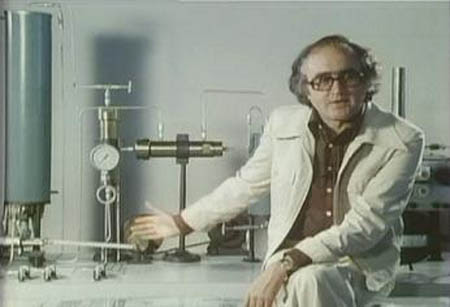
 

Connections

Still one of the best things ever put on television. Increasingly dated, of course, but the ideas and the history lessons still hold, as do the important messages about humanity, our past, and our future. James Burke guides the viewer through all the twists and turns that led to the late 20th century, in all of its staggering, and dangerous, complexity.


Planet Earth / Blue Planet

David Attenborough is a treasure, and these two series, and their follow-ups, make for one of the most spectacular documentary feats. Sprawling in scope, the show’s global reach can sometimes still fall into the standard patterns of animal behavior, which can feel repetitive. Overall, though, the breathtaking vistas, astonishing diversity, and peculiar habits make for endlessly entertaining viewing.


Firefly

I have a thing for short shows – the longer they last, the more likely you’re going to be disappointed. Arcs become confused, threads get lost, character development stalls. This abruptly-canceled sci-fi western therefore avoids all that, by being only one season (with a movie that finishes the story). Joss Whedon was fresh off of Buffy when he made this. and we all learned who Alan Tudyk was.


Avatar: The Last Airbender

One of the finest pieces of character development and storytelling. The show produced three seasons of beautiful world-building, drama, and comedy. Avatar is epic in scope, without feeling overwhelming, and full of heart. It was followed by The Legend of Korra, which has its moments, but doesn’t live up to the original series.


The West Wing

Aaron Sorkin’s work was never better (The Newsroom was somewhat close, though). An incredible ensemble cast navigates amazing dialogue and marvelously-crafted plots. After four seasons the show wobbled for a bit, especially in a rough patch through the end of the fifth and start of the sixth season. That said, the show ended so strongly, with Jimmy Smitts and Alan Alda duking it out for President, it managed to redeem itself.


Coupling (UK)

This turn-of-the-millennium BBC comedy allowed Steven Moffat to stretch his writing talents in top-notch comedy. The episodes are still laugh-out-loud funny twenty years on, which is always the mark of a top-tier sitcom, in my opinion. Many of the cast have gone on to more visible and memorable roles, and Moffat went on to make Sherlock and Dr. Who.


The Prisoner

A show that was way ahead of its time. Intellectually more on par with programs decades later (like Lost) The Prisoner combined mystery, wit, and science fiction. Patrick McGoohan subverted the Cold War spy tropes of the day and delved into uncharted psychological territory for television. In the final few episodes, it launched into a whole new realm, far beyond anything television had tackled up to that point.


BoJack Horseman

Over six series this show provides a rollercoaster of very challenging and sometimes hilarious viewing. As the themes delve ever-darker, and the story becomes all the more uncomfortable we have to reckon over, and over, with the morality and actions of our ‘protagonist’. It isn’t always easy, but the majority of the series is great television.


Daria

A flawed masterpiece, Daria takes some time to warm-up. A high-school comedy, Daria is the unpopular girl who is different because she’s smart and bored, and her best friend Jane is unpopular because she’s a legitimate artist - who is also bored. They have a non-clichéd relationship, which was fairly rare for the time, surrounded by characters who you may find all-too-familiar…


Cosmos: A Personal Voyage

Unlike Connections, Cosmos really is increasingly hampered by its age. Carl Sagan provided some needed updates, around a decade later, but much has changed since those updates in the early 1990s. The fundamentals remain excellent, however, and the Tyson reboot, Cosmos: A Spacetime Odyssey, is also a nice series, and worth viewing.


Second-Tier Shows


These are great shows. They are worth your time. But… there are consistency issues.


Clone High

A nice single-series show. As time goes on, the show gets increasingly dated, with early 2000s pop culture references and cameos making it more difficult to relate to. Still, the amusing high school comedy with the premise of famous clones from history all trying to work out their problems and love lives together remains delightful.


The Twilight Zone

The original series with Rod Serling is full of amazing episodes. But, to be honest, the majority of the episodes we’ve forgotten - most aren’t memorable at all. There were 156 episodes – and about 30 really good ones (The Obsolete Man, The Monsters are Due on Maple Street, The Invaders). Those standouts deserve a slot on this list, but the show as a whole is second-tier.


Mystery Science Theater 3000 (Original)

As Joel or Mike critiqued movies with their robot pals, they popularized the riffing that we now take for granted. The early episodes with Joel had better filler material (Dr. Forester) but the later episodes with Mike (whose filler was just awful) had better comedy. Some of MST3K’s movies are real treasures (The Final Sacrifice, Space Mutiny)… but so many aren’t that it remains second-tier.


Black Mirror

I'm including this because, even though on-going, it is an anthology series. Charlie Brooker’s dystopian take on the early 21st century has some of the finest writing in recent times. The first two seasons, of three episodes each, were excellent, including the Christmas special. The fourth season, had three nice episodes, out of six. I’ve not seen the more recent work, but hear nice/mixed things...


Miniseries:


Band of Brothers

An incomparable historical drama, detailing America’s first paratroopers as they serve through the entirety of the American engagement in Europe in World War II. Having personally felt underwhelmed by Saving Private Ryan, this takes the Spielberg/Hanks vision and gives it the breathing room it needed, chronicling the lead-up to D-Day all the way through the end of the War.


Brideshead Revisited

The story of Charles and Sebastian…and Julia. A beautiful work of nostalgia and memory, Jeremy Irons and Anthony Andrews provide the leads, with an amazing supporting cast that includes John Gielgud and Laurence Olivier. The adaptation of Evelyn Waugh's roman a clef tackles themes from the transition to adulthood, exploring one's moral identity, and abandoning oneself to love.


The Singing Detective

A work which does ‘meta’ better than any other I know. Complex narrative and ideas don’t cloud an otherwise enjoyable story, however, but elevate it. Michael Gambon is a writer afflicted by two diseases, one psychological and one physical. The initially bed-ridden journey to recovery makes him confront himself and us, the viewers.


John Adams

Another great historical drama. Against the backdrop of the early history of America, Giamatti portrays Adams superlatively, and is surrounded by a wonderful cast of familiar faces. Covering the period from the dawn of the Revolution to Adams’ death as a remarkably old man, it deservedly ended up winning all sorts of awards.


Dekalog

Kieslowski’s great ten-part work has each episode focus on a different commandment. Poland in the 1980s was just starting to thaw, and the series portrays a stark Cold War desolation. Moving portrayals and clever adaptations of the Old Testament values to modern times make for an unforgettable series that still resonates over thirty years later.


Watchmen

I loved this, but I’m putting it a bit lower for two reasons. One, it just came out, and sometimes ardor cools. Second, I have the background of having read the book (which the story builds on) and I’m not sure it would make as much sense to someone who hadn’t read the graphic novel. The sci-fi mystery is set in Tulsa in 2019, and feels like the ultimate miniseries for our times.

Sunday, December 6, 2020

Overlooked Kennedy Center Honorees

The Kennedy Center Honors are for lifetime contributions to American culture through the performing arts. There are, however, some glaring omissions. It's crazy to me none of these people have been honored. Here are my top eight, arranged by age:


Francis Ford Coppola, 81.

1.     Francis Ford Coppola. Director of The Godfather, The Conversation, and Apocalypse Now. Granted, Coppola hasn’t made the same quality of films since the 1970s, but he’s still a landmark film director.

Prior Kennedy Center Honorees: Martin Scorsese, George Lucas, Steven Spielberg.

Alternate: Coen Brothers.


Watts (79), Richards (76), Jagger (77), and Wood (73).

2.     The Rolling Stones. Essential rock band who recorded Exile on Main Street, Let It Bleed, and Sticky Fingers. Famous songs include “Satisfaction,” “Gimme Shelter,” “Miss You”.

Prior Kennedy Center Honorees: The Who, Led Zeppelin, The Eagles.

Alternate: Public Enemy.


Neil Young, 75.

3.     Neil Young. Singer-songwriter known for his work with Crosby, Stills, and Nash and Crazy Horse. Famous songs include “Heart of Gold,” “Like a Hurricane,” “Rockin’ in the Free World”.

Prior Kennedy Center Honorees: Bob Dylan, Paul Simon, Bruce Springsteen.

Alternate: Van Morrison.


Alan Menken, 71.

4.     Alan Menken. Composer of film scores including Beauty and the Beast, Aladdin, and Pocahontas. EGOT-winner who provided the music for the Disney Renaissance and Broadway shows.

Prior Kennedy Center Honorees: John Williams, Andrew Lloyd Weber, Stephen Sondheim.

Alternate: Hans Zimmer.


Whoopi Goldberg, 65.

5.     Whoopi Goldberg. Actress and comedienne from The Sister Act, The Color Purple, Ghost. EGOT winner, now known for her television role on The View.

Prior Kennedy Center Honorees: Lily Tomlin, Carol Burnett, Lucille Ball.

Alternate: Julia Louis-Dreyfus.


Daniel Day-Lewis, 63.

6.     Daniel Day-Lewis. Actor from My Left Foot, There Will Be Blood, and Lincoln. Generally regarded as one of the best actors of the past thirty years.

Prior Kennedy Center Honorees: Tom Hanks, Robert De Niro, Dustin Hoffman.

Alternate: Denzel Washington.


Renee Fleming, 61.

7.     Renee Fleming. Lyric soprano with numerous famous roles in traditional opera as well as other vocal performances. Her music has won Grammys, Oscars, and has helped keep opera alive for the younger generation.

Prior Kennedy Center Honorees: Marilyn Horne, Leontyne Price, Beverly Sills.

Alternate: Joyce DiDonato.


Aaron Sorkin, 59.

8.     Aaron Sorkin. Screenwriter and playwright known for A Few Good Men, The West Wing, and The Social Network. Author known for his quick, witty dialogue and prestige drama movies.

Prior Kennedy Center Honorees: Neil Simon, Arthur Miller, Edward Albee.

Alternate: Tony Kushner.


Audra McDonald, 50.

9.     Audra McDonald. Broadway actress and singer known for “A Raisin in the Sun,” “Porgy and Bess,” and “Ragtime”. Has won more Tony awards than any other person.

Prior Kennedy Center Honorees: Helen Hayes, Mary Martin, Julie Andrews.

Alternate: Bernadette Peters.

Monday, November 30, 2020

Timeline of American Music

If you wanted to learn American music history in ten easy installments, you'd divvy the nation's history into ten segments of twenty-five years each (rounding up to 250 years of music), and then you'd simply pick a song for each of the twenty-five year installments, symbolizing and epitomizing American music during that era.

Here are my ten:


1776-1800: Yankee Doodle


The quintessential song of the American Revolution. Written originally by an English musician in 1770, the song was reportedly popular for both redcoats and continental soldiers. The colonist's adoption of the tune was an act of re-appropriation, since the lyrics are decidedly derisive of the Yankees (critiquing our podunk fashion sense in the line about sticking a feather in their hat and calling it Macaroni - that is, fine Italian fashion). We owned our backwater status by making the song an early anthem, and defeating the redcoats to boot.

1800-1825: The Star-Spangled Banner (1814)


America developed an early admiration for the flag as our defining symbol. With lyrics that commemorate the War of 1812 (when the British came back), the tune by Francis Scott Key, who actually witnessed the battle he wrote his song about, became our National Anthem (although not officially until over a century later). The song for this era of early America emphasizes in its lyrics resilience and resistance, and the importance of the military that will define the nation moving forward.

1825-1850: Oh! Susanna (1848)


See, the thing is, we're a very racist country. Stephen Foster wrote a bunch of popular songs that became part of the American songbook, but lots of them are unabashedly racist. Any honest survey of American music should acknowledge this painful past, and the fact that for nearly a century minstrelsy and Jim Crow songs were among the most popular forms of entertainment. Even the seemingly benign Foster tunes, like Oh! Susanna, have troubled pasts.


1850-1875: When Johnny Comes Marching Home (1863)


The question of slavery dominated the politics of the 1850s, leading to the Civil War of the 1860s, and the failure of Reconstruction into the 1870s. There are a few iconic Civil War songs, but the one that has become the most famously haunting is probably When Johnny Comes Marching Home. Written by Patrick Gilmore, the lyrics are seemingly upbeat, but the contrasting somber music has given the tune its staying power.


1875-1900: Stars and Stripes Forever (1896)


The last quarter of the 1800s was marked by imperialism. It's the era of the Spanish American War, the annexation of Hawai'i, and a vast, rapid growth in population. The frontier was tamed, indigenous peoples wiped out, and America's emerging as a global force to reckon with. John Philip Sousa was an innovative composer of flashy, catchy, unabashedly patriotic marching songs. The recording is also interesting since it is a recording - an example of the nascent technology that would change music in the 20th century.


1900-1925: St. James Infirmary Blues (1927)


I admittedly bent the rules for this one, by going two years past the cutoff. Regardless, one of the critical developments of American music in the first quarter of the century was the emergence of Jazz. Many important developments took place, from Scott Joplin to King Oliver, but it was Louis Armstrong's virtuosity that elevated the form, and innovated it. Along with West End Blues, St. James Infirmary is one of Armstrong's keynote recordings.


1925-1950: This Land is Your Land (1945)


It was a time of unrest and social upheaval - of Depression and War. Much of Guthrie's output focuses on labor unions, socialism, and hesitation about joining the war effort (until Pearl Harbor, then the songs change their tune). By far his most famous song, This Land Is Your Land echoes those themes: the original draft of the lyrics (not surprisingly, given the title and chorus) had an indictment against private property. Now it's taught to little children throughout America from California to... well, you get the idea.


1950-1975: Respect (1967)


From the 1950s to 1970s, Rock and Roll and R&B changed music. From Little Richard to Motown, the era was full of amazing performers and songwriters. While Rock and Roll became globally popular, though, R&B and Soul music stayed more of an American genre, and Aretha Franklin was the high priestess of Soul. With lyrics originally by Otis Redding, Respect became an anthem that reflected the times - a rallying cry both for the Civil Rights movement, and the women's rights movement.


1975-2000: Bring the Noise (1988)


The biggest musical development in the last quarter of the 20th century was inarguably Hip Hop. Public Enemy is the pivotal group between the genre's early pioneers (Run DMC, EPMD, and Eric B and Rakim) and the culturally-conscious artists who would emerge in the 1990s (Notorious BIG, Nas, and The Fugees). In a tradition going back to Yankee Doodle, Public Enemy takes the criticism thrown at them ("hip hop is just noise") and wears it as a badge of honor. Even the album title was provocative: It Takes a Nation of Millions to Hold Us Back.


2000-2025: Old Town Road (2019)


A song recorded by Lil Nas X, in one day, on $30 equipment, at his sister's house, which was remixed with Billy Ray Cyrus, and then went viral on Tik Tok, before becoming globally famous. What could be a better song to epitomize our current musical moment? After all, no new genres have emerged in the past 20 years, and the low-fi indie sound of the 2000s was played out by 2010. Of course this last entry is speculative, but as American music is increasingly dominated by the roles of pop, country, and hip hop, I think it's a fair bet to represent both our polarized country, and our pop music conformity.

Wednesday, November 18, 2020

20th Century Western Music

America dominated music in the 20th century. First they developed jazz, and modern musical theater. From there they launched some forms of limited appeal, but influential nonetheless: country/bluegrass, folk, and the blues. Then came rock and R&B/soul, blending these earlier forms together in wildly popular ways. Finally, hip hop emerged as the last great musical innovation and contribution.

To be fair, in terms of global popularity, electronica wasn't American, initially. Shout-out to Germany and the UK on that one.

Even pop and vocals were heavily influenced by the U.S., from crooners like Sinatra to pop vocals like the Ronettes and Dionne Warwick. Think about it - K-Pop has more in common with Phil Spector then it does traditionally Korean music and instrumentation. 

Now, there were very important 20th century developments in the older genres as well, notably western classical and opera, which are European in origin, and changed greatly. There are also, of course, incredible musicians and innovators across the world in their own fields - Ravi Shankar in India, Umm Kulthum in Egypt, Ivo Papasov in the Balkans, and countless others. 

But for Western Music, for the 20th century, I think you could be pretty well informed if you listened to the following works: a sort of quick guide to the major artists and releases. I've limited myself to ten releases per genre, without repeating artists, for broadest scope. I've also left out 'Hits', 'Collections', 'Anthologies', and 'Compilations', so as to only provide intentional works.


Classical/Opera:

Appalachian Spring, Aaron Copland

Einstein on the Beach, Philip Glass and Robert Wilson

The Good, the Bad, and the Ugly, Ennio Morricone

Harmonium, John Adams

Music for 18 Musicians, Steven Reich

Porgy and Bess, George Gershwin, Ira Gershwin, and DuBose Heyward

Quartet for the End of Time, Olivier Messiaen

The Rites of Spring, Igor Stravinsky

Star Wars, John Williams

Variations for Orchestra, Arnold Schoenberg


Musicals:

Cats, Andrew Lloyd Webber and TS Eliot

Chicago, John Kander and Fred Ebb

A Day in Hollywood/A Night in the Ukraine, Frank Lazarus and Dick Vosburgh

Fiddler on the Roof, Jerry Bock and Sheldon Hardnick

A Little Night Music, Stephen Sondheim

My Fair Lady, Alan Jay Lerner and Frank Loewe

Oklahoma!, Richard Rodgers and Oscar Hammerstein II

Rent, Jonathan Larson

The Rocky Horror Picture Show, Richard O'Brien

Stormy Weather, Various


Jazz:

Blue Light 'Til Dawn, Cassandra Wilson

Carnegie Hall Concert of 1938, Benny Goodman

Clifford Brown and Max Roach, Clifford Brown and Max Roach

Count Basie Swings, Joe Williams Sings, Count Basie and Joe Williams

Ellington at Newport, Duke Ellington

The Inner-Mounting Flame, Mahavishnu Orchestra

Kind of Blue, Miles Davis

The Koln Concert, Keith Jarrett

A Love Supreme, John Coltrane

The Shape of Jazz to Come, Ornette Coleman


Blues:

At Newport, Muddy Waters

Born Under a Bad Sign, Albert King

Damn Right I've Got the Blues, Buddy Guy

Hoodoo Man Blues, Junior Walker

Irish Tour '74, Rory Gallagher

Live at the Regal, B.B. King

The Natch'l Blues, Taj Mahal

The Next Hundred Years, Ted Hawkins

Sings Ballads and Blues, Odetta

Two Steps from the Blues, Bobby 'Blue' Bland


Folk:

Basket of Light, Pentangle

Bringing It All Back Home, Bob Dylan

Dust Bowl Ballads, Woody Guthrie

I See a Darkness, Bonnie Prince Billy

Liege and Leif, Fairport Convention

Old Hag You Have Killed Me, The Bothy Band

Shoot Out the Lights, Richard and Linda Thompson

Songs for John Doe, Almanac Singers

There and Now: Live in Vancouver, Phil Ochs

We Shall Overcome, Pete Seeger


Country/Bluegrass:

At Folsom Prison, Johnny Cash

Chester and Lester, Chet Atkins and Les Paul

Gunfighter Ballads and Trail Songs, Marty Robbins

Honky Tonk Heroes, Waylon Jennings

In Search of a Song, Tom T. Hall

Live, Alison Krauss and Union Station

Live from the Old Quarter, Houston Texas, Townes Van Zandt

Modern Sounds in Country and Western Music, Ray Charles

Red Headed Stranger, Willie Nelson

Willis Alan Ramsey, Willis Alan Ramsey


Rock:

Appetite for Destruction, Guns n Roses

Astral Weeks, Van Morrison

At Fillmore East, Allman Brothers

Back in Black, AC/DC

The Clash, The Clash

Led Zeppelin IV, Led Zeppelin

Pet Sounds, The Beach Boys

The Rise and Fall of Ziggy Stardust and the Spiders from Mars, David Bowie

Sgt. Pepper's Lonely Hearts Club Band, The Beatles

Trout Mask Replica, Captain Beefheart


R&B/Soul:

Back Stabbers, The O'Jays

Dusty in Memphis, Dusty Springfield

I Never Loved a Man the Way I Love You, Aretha Franklin

Live at the Apollo, James Brown

Otis Blue, Otis Redding

Pieces of a Man, Gil Scott-Heron

Superfly, Curtis Mayfield

Talking Book, Stevie Wonder

What's Going On, Marvin Gaye

You Got My Mind Messed Up, James Carr


Pop/Vocals:

After Midnight, Nat King Cole

Blue, Joni Mitchell

A Christmas Gift to You, Phil Spector

Ella Fitzgerald Sings the Cole Porter Songbook, Ella Fitzgerald

In the Wee Small Hours, Frank Sinatra

Odessey and Oracle, The Zombies

Ray of Light, Madonna

Rumours, Fleetwood Mac

Tapestry, Carole King

Thriller, Michael Jackson


Electronica:

Better Living Through Chemistry, Fatboy Slim

Dig Your Own Hole, Chemical Brothers

Endtroducing....., DJ Shadow

Global Underground 013: Ibiza, Sasha

Mezzanine, Massive Attack

My Life in the Bush of Ghosts, David Byrne and Brian Eno

Neu! 75, Neu!

Play, Moby

Rubycon, Tangerine Dream

Trans-Europe Express, Kraftwerk


Hip Hop:

Illmatic, Nas

It Takes a Nation of Millions to Hold Us Back, Public Enemy

The Low-End Theory, A Tribe Called Quest

Paid in Full, Eric B and Rakim

Paul's Boutique, Beastie Boys

Raising Hell, Run DMC

Ready to Die, The Notorious B.I.G.

Sex Packets, Digital Underground

Straight Outta Compton, NWA

Strictly Business, EPMD

Wednesday, October 21, 2020

20 Most Important People of the 21st Century

The 21st century is only 20 years old, but (in a complete repudiation of my last post’s caution) here are some predictions of folks who might make the list of most important people of the 21st century.

And, as before, although I hope this would be obvious, inclusion on the list doesn't mean you're a good person – bin Laden was a key player of the early 21st century, but we all recognize that sometimes the most important people are also the vilest.

Finally, the entrants are divided into five categories, and then arranged (roughly) chronologically by the dates of their main accomplishments.


Politicians and Activists


Osama bin Laden (Saudi Arabia): Mastermind of the 9/11 attack that diverted America and the world’s attention to fighting terrorism, particularly in the Middle East. 

Angela Merkel (Germany): Led the fledgling European Union through many of its stormiest crises.

Xi Jinping (China): Massively increased China’s economic dominance, and held more power than any other leader in 40 years, even rewriting parts of the constitution.

Donald Trump (USA): Derailed America both at home and abroad in a culmination of far-right policies imitated by strongmen around the globe.


Scientists and Inventors


Elon Musk (South Africa, Canada, USA): Designer in charge of SpaceX, Tesla, and other scientific ventures.

Klaus Lackner (USA): Scientist exemplifying all those who are working on carbon capture technology, to reverse climate change.

“Satoshi Nakamoto” (Japan?): Unknown identity who implemented the previously theoretical blockchain technology and launched bitcoin.

Jennifer Doudna and Emmanuelle Charpentier (USA&France): Geneticists who unlocked the enormous power of CRISPR-CAS9 gene editing.


Magnates and Businesspeople


Jeff Bezos (USA): Leader of Amazon which in the early decades of the century boomed into one of the world’s largest and most influential corporations.

Steve Jobs (USA): Revamped Apple’s image with the iPod, followed by the first widespread touchscreen smartphone.

Takeshi Uchiyamada (Japan): Leader of Toyota as they became Japan’s largest company, and developer of the Prius.

Mark Zuckerberg (USA): Head of Facebook who made social media the center of many people’s lives.


Intellectuals and Influencers


Jimmy Wales (USA): Inventor of Wikipedia, the free online encyclopedia.

Michael Pollan (USA): Author who investigates the relationship developed countries have with overly processed food and food culture for the future.

Thomas Piketty (France): Economist who provides the data behind concepts like income inequality, “the 1%”, and the “wealth tax”.

Ta-Nehisi Coates (USA): A leading voice on black identity and the continuing realities of systemic racism in America.


Artists and Icons


Ai Weiwei (China – exiled): Multidisciplinary sculptor, architect, painter, and filmmaker known for bold commentary with his pieces.

Chimamanda Ngozi Adiche (Nigeria): Representative of a new wave of globally-read African literature maturing beyond older postcolonial meditations.

Malala Yousafzai (Pakistan): Icon of women’s rights and especially girls’ education rights in oppressive countries.

Lin-Manuel Miranda (USA): Musician and author who wrote and performed Hamilton, creating a phenomenally popular impact on American theater, music, and culture.

Tuesday, October 20, 2020

100 Most Important People of the 20th Century

It's been twenty years, but now that the dust has settled somewhat, I think I can come up with an adequate list of the century's top innovators and outsized influencers.

Of course the trickiest inclusions are those towards the end of the decade. By 1999 Jeff Bezos wasn't yet a big deal, for example. Nor, more soberingly, was Osama bin Laden - even though both were active in the late 20th century. For this list, then, the impact had to be during the 20th century. Steve Jobs, for example, is on for the Macintosh - not for the iPhone of the 21st century.

And of course, although I hope this would be obvious, inclusion on the list doesn't mean you're a good person - Hitler was a key player of the 20th century, but we all recognize that sometimes the most important people are also the most vile.

Finally, the entrants are divided into five categories, and then arranged (roughly) chronologically by the dates of their main accomplishments.

100 Most Important People of the 20th Century


Politicians and Activists


Emmeline Pankhurst (UK): Leader of the British women’s suffrage movement.

Vladimir Lenin (Russia/USSR): Leader of the Russian Revolution and founder of the USSR.

Mohandas Gandhi (India): Nonviolent advocate to end the British occupation of India.

Franklin Delano Roosevelt (USA): President who ushered America through the Depression and World War II.

Adolph Hitler (Germany): Fascist dictator and force behind World War II and the Holocaust.

Winston Churchill (UK): Prime Minister during World War II and the early Cold War.

David Ben-Gurion (Israel): Modern advocate of Zionism and founder and leader of Israel.

Mao Zedong (China): Founder of the Chinese Communist Party and architect of the disastrous Great Leap Forward and Cultural Revolution.

Jawaharlal Nehru (India): India’s first post-independence leader who oversaw the Partition.

Faisal of Saudi Arabia (Saudi Arabia): Monarch of Saudi Arabia as it modernized and developed its oil.

Dag Hammarskjold (Sweden): United Nations Secretary General largely responsible for the organization's  early successes.

Ho Chi Minh (Vietnam): Communist leader of North Vietnam whose fight led to French withdrawal.

Che Guevara (Argentina, Cuba): Guerrilla revolutionary in Cuba, Angola, and others.

Martin Luther King, Jr. (USA): Nonviolent pastor and American Civil Rights activist.

Ayatollah Khomeini (Iran): Cleric leader of the Iranian Revolution.

Ronald Reagan (USA): President who resuscitated conservative politics and economics in the west.

Lech Walesa (Poland): Labor leader who opposed Soviet influence in Eastern Europe, later President.

Liu Xiaobo (China): Dissident and democratic activist involved in Tiananmen Square.

Michael Gorbachev (USSR/Russia): Soviet leader whose reforms dismantled the USSR and helped end the Cold War.

Nelson Mandela (South Africa): Anti-Apartheid activist and first President of free South Africa.


Scientists and Inventors


Orville and Wilbur Wright (USA): Inventors of heavier-than-air flight.

Albert Einstein (Germany, USA, others): Physicist who developed the theory of relativity.

Leo Baekeland (Belgium): Chemist who made breakthroughs in developing plastic.

Edwin Hubble (USA): Astronomer who figured out there was a universe beyond the Milky Way galaxy.

Werner Heisenberg (Germany): Physicist who developed quantum mechanics.

Robert Goddard (USA): Invented the first practical liquid-fuel rocket.

Philo Farnsworth (USA): Invented the electrical television system.

Alexander Fleming (UK): Developed antibiotics with the discovery of penicillin.

Enrico Fermi (Italy, USA): Radiation physicist and developer of nuclear power.

Alan Turing (UK): Inventor of the modern programmable computer and AI theorist.

Jacques Cousteau (France): Marine explorer, educator, and conservationist, who helped develop the underwater breathing apparatus.

William Shockley (USA): One of the key inventors of the silicon microchip.

Jonas Salk and Maurice Hilleman (USA): Vaccinologists who developed the main vaccines of the century.

James Watson and Francis Crick (UK&USA): Discovered the structure of DNA, unlocking genetics research.

Louis and Mary Leakey (UK): Paleontologists who helped discover humanity’s origins in East Africa.

Jane Goodall (UK): Primatologist who pioneered new methods in field work and conservation.

Norman Borlaug (USA): Geneticist who increased global food security with the Green Revolution.

Rachel Carson (USA): Launched the environmental movement with improved understanding of ecology and the dangers of human meddling in the ecosystem.

Neil Armstrong, Buzz Aldrin, and Michael Collins (USA): First humans to travel to the moon.

Tim Berners-Lee (UK): Invented the World Wide Web.


Magnates and Businesspeople


Willis Carrier (USA): Developed and marketed modern electrical air conditioning.

Henry Ford (USA): President of Ford Motors who developed the modern assembly line to make mass-market cars.

Amadeo Giannini (USA): Invented branch banking and began giving loans to regular customers.

Coco Chanel (France): Invented the boutique and helped launch the global fashion industry.

Walt Disney (USA): Created the Disney Company with innovations in media and tourism.

David Sarnoff (USA): Helped create broadcast television and oversaw many early milestones.

Juan Trippe (USA): Ushered in commercial air travel and the importance of jet aircraft.

Stephen Bechtel (USA): President of the Bechtel Corporation, building megaprojects from the Hoover Dam, to transit systems, to oil pipelines around the globe.

William Levitt (USA): Real estate developer who produced the suburban housing of America while spreading segregation.

Estee Lauder (USA): Launched the modern, scientifically-sound, cosmetics business.

Leo Burnett (USA): Created modern advertising by increasing the importance of visuals and branding.

Ray Kroc (USA): President of McDonalds who largely developed fast food culture.

Walter Reuther (USA): Labor leader who oversaw the period of America’s strongest union membership and used his clout to secure lots of liberal reforms.

Thomas Watson Jr. (USA): Leader of IBM during its key mid-century developments.

Charles Merrill (USA): President of Merrill-Lynch who got Americans to become shareholders, and to invest in Wall Street.

Akio Morita (Japan): Led Sony and oversaw the world of transistors and affordable electronic goods.

Steve Jobs (USA): Co-founder and President of Apple, launching the Macintosh.

Bill Gates (USA): Co-founder and President of Microsoft, developing the Windows operating system.

Sam Walton (USA): President of Walmart, who developed the box store and helped kill the mom-and-pop stores.

Rupert Murdoch (Australia, USA): International media mogul in newspapers, books, movies, and television.


Intellectuals and Influencers


Sigmund Freud (Austria, UK): Invented psychoanalysis and understanding of dreams, the subconscious, and mental health.

Margaret Mead (USA): Pioneering cultural anthropologist who fought predominating racist theories of the time.

Lewis Terman (USA): Developed the modern IQ test, and popularized the concepts of standardized testing and personality tests in general.

Margaret Sanger (USA): Activist, founder of Planned Parenthood, and educator who advocated safe abortions and birth control, and helped develop the contraceptive pill.

Kurt Gödel (Austria/Czechia, USA): Mathematician who developed the incompleteness theorems, landmarks in mathematics and logic.

John Maynard Keynes (UK): Economist who wove in vital safety nets into capitalist systems to avoid and ease economic disasters.

Jean Piaget (Switzerland): Created the field of child psychology, explaining the different developmental stages of a child’s mind and behaviors.

John von Neumann (Hungary, USA): Mathematical polymath who created game theory to explain human behavior in everything from economics to how we interact in social settings.

Simone de Beauvoir (France): Leader of the second-wave feminist movement for women’s civil rights.

Clark Kerr (USA): University administrator who oversaw the creation of ‘multiversity’ tiered education as a way meeting the growing demand for higher education, which was then copied around the globe.

Pope John XXIII (Italy): Oversaw the formation of the Second Vatican Council which introduced significant modern reforms into the Catholic Church.

Ludwig Wittgenstein (Austria, UK): Philosopher whose revolutionary work on language largely upended centuries of metaphysical philosophy.

Hannah Arendt (Germany, USA): Political philosopher who tried to understand the role of development of Nazism in Germany and “the banality of evil”.

Frantz Fanon (France): Author and advocate of decolonization and post-colonial culture and society.

Paulo Freire (Brazil): Educator who showed how formal systems of education can be made to not serve as systems of oppression, creating 'critical pedagogy'. 

John Rawls (USA): Political philosopher who made groundbreaking defenses of democratic systems.

Wangari Maathai (Kenya): Developed a successful NGO, the Green Belt Movement, that focused on sustainable land manage on a country-wide scale.

Noam Chomsky (USA): Pioneering linguist who helped bring down the then-widely influential theories of behaviorist psychology.

The XIV Dalai Lama (Tibet/China): Buddhist leader with global influence in peace movements and advocate for religious freedom, especially in China.

Jared Diamond (USA): Anthropologist and geographer who succinctly summarized why certain parts of the world developed complex civilization while others did not.


Artists and Icons


Helen Keller and Anne Sullivan (USA): Inspirational icons for disability education and rights.

Harry Houdini (Hungary, USA): Escape artist and illusionist who exposed spiritualists and psychics.

Pablo Picasso (Spain): Painter who developed Cubism and helped launch modern art.

Igor Stravinsky (Russia, France, USA): Modernist composer who redefined western classical music.

James Joyce (Ireland): Innovative novelist who created literary modernism.

Louis Armstrong (USA): Jazz pioneer and innovator which led to the blues and other musical forms.

Le Corbusier (Switzerland, France): Modern architect who revolutionized building design.

Charlie Chaplin (UK, USA): Silent film star and comedian who helped create and popularize Hollywood.

Jesse Owens (USA): Iconic Olympian who won four gold medals at the Berlin games in a triumph for black representation in sport.

Anne Frank (Netherlands): Teenage diarist who became an icon of the Holocaust.

Richard Rodgers and Oscar Hammerstein II (USA): Developed and popularized western musical theater.

The Beatles [John Lennon, Paul McCartney, George Harrison, and Ringo Starr] (UK): Resuscitated rock music and introduced a new maturity of lyrics and form.

Andrei Sakharov (USSR): Dissident scientist who stood up to the Kremlin and the nuclear arms race.

Jim Henson (USA): Developed the idea of using children’s television as an educational medium.

Amitabh Bachchan (India): The king of Bollywood as it grew up from the Golden Era.

Pele (Brazil): Internationally renowned Brazilian football (soccer) star and record-holder.

Bruce Lee (USA, Hong Kong): Globally popularized martial arts and the Wuxia film genre.

Diana, Princess of Wales (UK): Beloved "People's Princess" who helped redefine British royalty.

Harvey Milk (USA): Iconic politician who represented and fought for gay rights.

Steven Spielberg (USA): Film director who invented the modern blockbuster, action-adventure films.


So there you have it! If I goofed, do let me know.