Monday, August 31, 2015

Don't Stay in School

So there's a video on YouTube called "Don't Stay in School." It's pretty great, and that's coming from a teacher:


He makes a lot of good points regarding content, and how we learn seemingly useless information for much of our educational experience. The last lines are: "If you can't explain why a subject is applicable to most people's lives, that subject should not be mandatory. Introduce those topics, yes... But we should choose if we want to learn more. Nobody should be forced to learn something that isn't practically useful."

So this reminds me of when I was applying for colleges, and my father's best ten minutes of parenting.

We were driving somewhere. I had applied, willy-nilly, to a bunch of schools - thirteen applications I think - which was a decent expense, given the fees for applying. I had sort of just fallen into my high school, and with my high school grades I was hoping one of the baker's dozen would be a good fit.

My dad was driving, and he asked me why I wanted to go to college.

I gave the corny, but sincere-to-my-mind answer, "I just...want to learn everything!"

"Great. I'll buy you an encyclopedia set and save a lot of money."

This wasn't said in a jovial tone. This was an earnest response to wide-eyed opinions, and for ten minutes I worked out an answer until it was something I'd not even known, but now wanted: the experience of sitting in with experts, and asking questions that are deeper than data collection.

It reminds me of this song, because the important question is: what's the point of school?

From what I can tell, there are three overarching answers people provide:

1) School is for life/job-readiness

2) School is for developing your passions

3) School is for creating good citizens

Not surprisingly these are at odds with each other. The source of this is that people are different.

Broadly I think it is safe to say there are Generalists and Specialists. There are Mozarts out there, and there are Da Vincis. Neither one would have enjoyed the other's education. And herein lies the problem between model 1 and 2. Meanwhile, there's Uncle Sam, the guy paying for all this, who wants option 3.

If you are a Specialist, all those extra courses may be a waste of time/energy/money. If you're going to be the concert pianist, I mean, do you really need an Anthro course in college, or Algebra II in high school? By this reasoning, this would be a waste of time, and indeed a number of Specialists complain about their schooling for just this reason. Some kids really do know what they want to be when they grow up, and go and do that thing.

But we also have the Generalists, who may do well in a few fields, or have some inclination towards one area and then another. For them, a broad set of skills is best, rather than doing one thing intensively. They play into both of the other categories. They work well in the 'good citizen' model because, so the reasoning goes, if you have to vote on a bill to build a nuclear power plant in your county, it might be good if you know a little something about nuclear power. Otherwise you've only got talking heads to go off of, and gut reaction. A broad understanding of things makes Generalist fit nicely in box three.

For the first category, the Generalists are also sort of popular, because, unlike the Specialist, you don't know what you want to be. So lets try them all out! You may discover something you really like, and in the process you'll learn the basics of the field you'll be entering.

From the theoretical bluff it is easy to look down on these three models and admire them. Up close, however, they aren't so great.

Starting with the last first, the problem with job-preparedness in high school, is, of course, that most of us will go into things like office/service jobs which high school doesn't prepare you for at all. Did you even have a business class, or a "how to work in an office" class? Most students don't get a year's worth of economics.

And let's get real - you won't enter the corporate culture, usually, with just a high school degree (unless you are one of those Specialists, like a programmer, who can get away with it). That's why Business and Management is still, as ever, the most popular college major. Accounting also makes the top ten.

As the video suggests, we don't really do the whole life/job preparedness unless, you know, you want to be a historian, biologist, mathematician, or literary critic. And, to be fair, if you want to do real work in these fields, they are now so specialized that you do need to pick up the basics in high school, or else college would be 6-8 years long, having to learn the fundamentals first.

This is a good juncture to mention the specialists. Once again, the system doesn't really work in their favor. If you want to be a dancer, the US Public School System isn't designed to foster your talents, as Ken Robinson has made clear. Even with an interest in one of the four cores would be offset by boredom and frustration with the other three.

But here too lies the crux for the citizenship view of schooling. I mean, an intro level understanding of cells doesn't really prepare you for complex genetic decisions. Think about GMO concerns, the panic caused by the Large Hadron Collider, and so many others. Science is the easy example - what about the arts? If we're having a conversation on whether the government should fund public art, how many of us will have had painting or art classes in PS 114?

Even the sponsors of education in America aren't getting what they want out of it, namely an informed citizenry.

It also brings up a slightly troubling concept, that some decisions are best left to the experts, which, for a proud democratic and republican tradition, is sort of hard to swallow.

Our education system doesn't try to be all of these three models at once, at least not at the same time. For your early years it's a poor hybrid of the job/citizen models, and then in college it is rather more specialized. This transition of course, is therefore not very natural. How can you know you want to specialize in Sociology if you never knew it existed in high school as a field of study? So the colleges start you off with more general classes, only with more choices, and now you need a Masters when a Bachelors used to suffice.

The man paying for this, Uncle Sam, is clamping down on us, though, determined to prove our students are the mighty finest, and this has translated horrifically into standardized tests. Which is awful for students, schools, and teachers regardless of which model. It is detrimental to the citizenship model, because now there is even less time to learn the basics, detrimental to the passions, for it stifles them, and detrimental to the job-preparedness, for again, wasting their time on unneeded content and skills.

So that's not good.

If I could take Artie Duncan's place (if only) and had legislative superpowers, I'd make school look like the following, in terms of requirements. It's a long list, but the expectation would be that this is spread over all of middle and high school. I wouldn't mess with elementary, 'cause that's a whole different developmental story. In other words, this is roughly six years of stuff, based on my view that we need, as a country, to aim for the citizenship model. Some of these studies would be over many years, some a semester or less. It reflects all of my biases:

Taxes and Stocks – what are they, how to file, what is the market, how to trade
Budgeting and Jobs – budgeting: why important, how, how to interview (both sides), resume writing, unions, basic company structure (board of trustees, CEOs, etc.)
Economics – where does money come from, basics of micro, how businesses are opened/make money/fail
Logic – identifying fallacies, creating arguments
Basic math – calculate a tip, mental math up to PEMDAS
Statistics and Numbers – basic statistics, gambling, probability, and odds, decoding numbers/advertising
Psychology – social psychological phenomenon, decision making, developmental stages
Anatomy and Physiology – how the body works, sexual health and pregnancy, diet/nutrition
Health – common diseases, symptoms, and treatments/support: mental and physical, bacteria/viruses
Gender and Sexuality – what they are, relation to biology
Biology – ecology, evolution, basic genetics
Human Rights and Legal Rights – UN and USA, how the Constitution works
Law – how do courts work, jury duty, suing and being sued
Government – three branches and powers, how to vote, terms/requisites/numbers
Geography – states/territories/capitals, continents v countries, physical geography/climate science
Rhetoric – how to speak, how to identify rhetorical traps, addressing a crowd/gathering
Physics/Astronomy – big bang/age of universe, basic Newtonian, relativity, quantum, how electricity works
Literature – how to write informatively/creatively, how to read prose/poetry, how to analyze literature
Computer Science – how do computers work: hardware basics and software basics, internet basics
Science – method: sample size, hypotheses, testing conditions, results, repetition
Home Economics – how to fix basics: carpentry, electricity, plumbing, how mortgages/real estate works
Cooking – farm to table, how to cook
Parenting - how to raise a kid without totally screwing it up
Learning – how to do research, working in groups/individually, different learning types
Visual Art – basic skills: sketching, painting, sculpting, how to analyze a piece of art
Performance art – basic skills: music, dance, theater, how to read/analyze drama, basic music theory
History and Philosophy – basic USA, basic world, cultural relativism, ethics, world religions
Languages – ESL/Mandarin/Spanish/French/Russian/Arabic/Latin/Hindi: immersive reading, writing, speaking
Shared Culture Classics – Western: Homer Iliad, Sophocles Oedipus Rex, Plato Trial and Death of Socrates, Virgil Aeneid (selections), Dante Inferno, William Shakespeare Hamlet, Romeo and Juliet, Macbeth, Cervantes Don Quixote; Eastern: Epic of Gilgamesh, Wu Cheng’en Journey to the West (selections), Matsuo Basho Narrow Road to the Deep North, poetry of Du Fu, Wang Wei and Li Po, Kalidasa Recognition of Shakuntala, Valmiki Ramayana (selections), Rumi Mathnawi, Murasaki Shikibu The Tale of Genji (selections), Luo Guanzhong Romance of the Three Kingdoms (selections); American: Herman Melville Moby Dick, Mark Twain The Adventures of Huckleberry Finn, Willa Cather Death Comes for the Archbishop, Arthur Miller The Crucible, F. Scott Fitzgerald The Great Gatsby, Flannery O’Connor A Good Man is Hard to Find, poetry of Whitman, Dickinson, and Poe, essays of Henry David Thoreau and Ralph Waldo Emerson; Modern: Jorge Borges Ficciones, Tayeb Salih Season of Migration to the North, Wole Soyinka Death and the King’s Horseman, Juan Rulfo Pedro Paramo, Issam Mahfouz The China Tree, Octavio Paz Eagle or Sun?, Naguib Mahfouz Children of Gebelawi, Marjane Satrapi Persepolis.


Sunday, August 23, 2015

Inspirations

At the moment, as with most moments, I'm reading three books.

In the Science/Math category I'm reading, ever so slowly, George Boole's 'An Investigation of the Laws of Thought'. I suspect I will be reading it for some time.

In the Literature category I'm reading, every night before I go to bed, Boccaccio's 'Decameron'. I have also learned, from Tumblr, that this is something filthy in Italian.

In the Social Sciences/Philosophy category I'm reading, on strong recommendation, Lee Cockerell's 'Creating Magic'. This book is a guide to leadership from a former Disney executive.

And it's really good. So far I agree with everything in it, which is certainly rare. I think I sought it out, certainly atypical to my usual reading selections, for two reasons. One, as recently as last week I was getting very frustrated with poor leadership and advice manuals, and hoped this might change that. Second, as has been seen in the past on here, I am a big fan of Disney, and rather intrigued by how well they run their ship.

The book spends a lot of time acknowledging and praising people who were helpful guides, supportive mentors, or imparters of wisdom. So I thought I'd do the same, and take a post to celebrate people who were important in my life for helping me out.

While compiling such a notion, I broadened the list to be those people who inspired me in general, either through personal contact, or through their words/actions/art and so forth.

These are not my favorite people. For example,  I really love the art of Keith Harring. I appreciate it. But it has not 'inspired' me. I can visualize myself as essentially the same person I am now without having encountered his legacy. That can't be said for the people on this list.

Finally, I have exculpated my close friends and family, since they are obvious. Of course my wonderful family, and fabulous friends have inspired me! To think otherwise would just be silly.

Without further ado:

Teachers

Elementary/Middle
Janet Murphy
Robert Kerman
Al Green
Anne Roberts
High
Katharine Ross
Dave Meyer
Mark Clark
Jim Gaw
College/Grad
Norman Derby
Ron Cohen
Mansour Farhang
Mac Maharaj
Paul Voice
Vanessa La Rae
Eugene Rudzewicz
Rick Caswell
Dave Berieau
Sue Maguire

Deep Thinkers/Inspiring Figures

Carl Sagan
James Burke
Randy Pausch
Kirby Ferguson
Jared Diamond
James Randi
Christopher Hitchens
Ken Robinson
Charlie Brooker

Comedians

George Carlin
Louis CK
Bill Hicks
Eddie Izzard

Artists/Creators

Frank Lloyd Wright
Walt Disney/Mary Blair
Hayao Miyazaki
Jim Henson
MC Escher
Salvador Dali
Federico Fellini
Pete Seeger
The Beatles
Stanley Kubrick
Bill Watterson
Bill Amend
Gary Larson
Winsor McCay
Don Hertzfeldt
Odyssey Productions
Terry Gilliam
Monty Python
Rod Serling

Writers

Aristophanes
Sophocles
Aristotle
Lucretius
David Hume
Soren Kierkegaard
Martin Heidegger
Jean-Paul Sartre
Albert Camus
Ludwig Wittgenstein
Lewis Carroll
Cervantes
James Joyce
Jorge Luis Borges
Franz Kafka
William Wordsworth
Virginia Woolf
William Shakespeare
Daniel Quinn
La Rochefoucauld
Rachel Carson
Fyodor Dostoevsky
Plato/Socrates
Stanley Milgram
Erving Goffman
Carl Jung
Cass Sunstein

Historical Figures

Franklin D. Roosevelt
Lyndon Johnson
John F Kennedy
Nelson Mandela
Mohandas Gandhi
Mikhail Gorbachev
Sun Yat Sen
Abraham Lincoln
John Adams
Thomas Jefferson
Woodrow Wilson
Siddhartha Gautama
Eleanor Roosevelt
Andrei Sakharov


Friday, August 14, 2015

Good Advice

Advice is bullshit.

There's just too much of it - it's fatiguing. This past week I've been subjected to multiple TED talks over a period of five days of how-to-be-a-better-teacher-ing, AKA "professional development".

It's not the how, it's the why.

Be an inspiration.

You miss 100% of the shots you don't take.

Ask the right questions.

If you want to change minds, you need to change paradigms.

At some point, here, we went from feeling a vague kinship to these slogans to a vague repugnance - like viewing a lapdog piddle on a carpet that's not ours.

Brimming with cliches, standard wisdom, common sense, and other such drivel, advice has become a nice little industry. From the 7 Habits and other self-help to the endless workshops, speakers, retreats, and whatnot, no magic bullet has appeared. I mean, there's no one book, no one packet, no one anything - which is amusing, since most people seeking advice want it uncomplicated and easily applied. We like magic bullets because they get right to the point. And yes, I'm aware that that sentence can be read as a weirdly out-of-place double entendre.

The issue, I think, is that there are a lot of people out there, and they have different faults/"areas of improvement". So I have friends for whom missing opportunities isn't really a problem, because they are go-getter types. Yet they may struggle in love, or finance, or feel spiritually unfulfilled. But my spiritually-fulfilled, lucky in love, financially stable friend may be banging their head on the table due to missed opportunities.

You could spend your whole life chasing advice. And we know people who do. They are hard to stereotype and make fun of though. I mean, there's something tragic about them. Media, being vicious, hasn't let them off the hook entirely, and in sitcoms and dramas we meet these losers who burble happily about the latest whatever that changed their life. It's easiest to make fun of motivational speakers in this advice-seeking-bashing, because we already know the used car salesman trope, and for the sake of lazy writing, that's who these guru types are cast as.

Clearly there's a meta-level of this at work, too. If the problem with advice-chasers is that so many people need such different advice, it would seem obvious that a way of sorting people would be useful. That way you know what areas you need help in, specifically. Generally.

And so tons of these sorts of programs, speakers, courses, workshops, and retreats sprang up. So you can figure out who you are.

*     *     *

There was a time, not so long ago, when the idea of taking a test, or listening to a guru, or having your boss set aside time for a workshop, in which you discover yourself, was fucking absurd.

How we got here is an interesting tale, and, like most things in our society, it goes back to World War One.

A hundred years ago, psychology was a young, but maturing field. It had been around for about 40 years. Freud, William James, and many others, had been publishing since the 1870s, at least. And in the 1800s, a number of interests in the mind had emerged in intriguing ways such as phrenology (which was unscientific) and Mesmerism (which was). But all of this was individualized.

World War One saw the first real application of psychological categories, with the Stanford-Binet IQ test. To quote myself, from 2011:

"Archimedes applied numbers to experiments. When he stepped in a tub of water he saw the water level rise. So had thousands of others, maybe millions. But Archimedes assigned a number to that rise in water level, then came up with a formula, and a predictive model. Archimedes quantified the natural world. Without this critical connection science would not be possible.

"Alfred Binet applied this principle to psychology and intelligence, while a professor at Stanford, Lewis Terman, popularized it. The Stanford-Binet Intelligence Scale is more commonly known as an IQ test.

"Not surprisingly, given 20th century trends, the IQ was originally intended for education. The SAT really is the child of Binet. It was given to soldiers in WWI. Its descendants are obsessed over the world over."

The quantification of self arose from the most tragic application of Enlightenment theories of Progress to the real world: trying to quantify soldiers in the pointlessness of the First World War. For philosophers and cultural historians, WWI is a line in the sand. The old ideas of Progress from the late 1700s come abruptly, absurdly, to an end. In philosophy existentialism emerges as the dominating idea of the next 50 years, and in cultural studies and history, a wariness of human reason and purpose comes to the fore. In other words, the modern became sinister, and depressing.

Yet the seed which has now risen to heights of such folly, that people can be categorized into personality types - the basic notion of the IQ - is still with us a century on.

*     *     *

It is a sad state of affairs. The great Modern tragedy of WWI started our self categorization. With the end of WWII, 70 years ago, began a Postmodern reflection on our own lives that, while it began slowly with wakening awareness of a nuclear world, has now become omnipresent. Everyone wants to do life "right" as a consequence. Surely - surely - we can't all be making this up pointlessly as we go along? Is all of life to be seen as void of purpose, with no right answer?

Millennial Losers are figuring this out quickly. In the 90s there was an optimism that looked stunningly like the old Progress of the 1800s. Those Millennial childhoods were pretty darn great. To quote myself, again:

"The economy was roaring, and the middle class seemingly on the swell. Crime was down, optimism up, and no enemies. No one in the world was there to challenge us, and scores of old feuds were being settled. Ireland made peace. The Israelis and Palestinians made peace. The Balkans settled. It was now Pax Americana and for a child with no understanding of the background forces of the world all I knew was life was good."

And then, you know, 9/11.

And Afghanistan.

And Iraq.

And the financial collapse.

And so the youth of this country is sort of figuring out that, no, Progress was not resurrected under Clinton. 

But the notion Millennials are grappling with is still couched in the idea of "adulting" and adulthood. They've only partially realized that it's not just the act of entering your 30s that leaves you reflecting on your lack of preparedness and understanding. Because there is nothing to understand - for the rest of the story. Twenty years into your "adulting" you can still only make your own truth, and figure out your own problems. With luck, you'll get good advice, and leave things off a little better. Likely, you'll screw up anyway. In trying to not make the mistakes of your parents you'll instead overcompensate and make mistakes that your kids will try to rectify for your grandchildren. In trying new ideas out in the workplace, new blunders will arise, and the pendulum will swing towards the original, bad, idea you were attempting to fix. Mistakes in love, especially costly ones, aren't becoming less frequent over time. You aren't really going to be an exception to that.

For one hundred years we have been trying to figure out how to make sense of it all, and who we are, in the light of Progress, psychology, tragedy, absurdity, postmodernism, post-9/11, and Martha Stewart. 

We will never know.  You are still going to fuck things up. It's okay. Except when it isn't. But a seminar, guru, or retreat isn't going to fix it so that fuckups go away. Even the attendees will still end up doing a big thing badly at some point in their lives.

That's what's in the back if Millennial Loser minds: the fear that by adulting badly we'll screw over the human race and planet as badly as our Boomer parents did. And guess what? We will! I guarantee it. No question. Because every generation has since the dawn of the modern era.

But soul-searching, and trying to find ourselves, or the right advice, isn't new, and is a waste of time and funds. Because for all our failures, we will get some things right. If we're not too busy gazing at our navels.

Bernie 2016!

Back East

Approximately one year ago – not even – I moved back to California. For the past two and a half weeks, I went back East.

If you add it all up, I’ve spent about eight years of my life living in areas east of Pennsylvania, and north of D.C. – what I reckon as ‘back East’. The very first time I went out there I was in high school, and I went to my sister’s high school graduation, in Delaware, at the end of my Freshman year. We also saw historic Philadelphia on that trip.

A few years later I was applying for colleges, and a number of them being back East led to my mom and I taking a road trip to see campuses. It was the first time I’d ever seen New York City. We went to New Jersey, Massachusetts, through Connecticut, and up to Vermont. In the end, months later, I decided to go to college in Vermont.

That summer after my Freshman year of college my mom moved to Boston, and I began to explore that area and its surroundings (Cambridge, Salem, etc.). The summer after that I got a job in New Hampshire. My mom and I took trips to Newport, RI to see the mansions and Acadia, Maine, to go camping. By the end of college I’d been to all the states of New England and the Mid-Atlantic. For five years, with the exception of studying in the UK for a few months, and, taken together, a couple of months spent on vacation in California, I’d lived back East. That summer, job-hunting after getting my Masters, I presumed I wouldn’t stay, or really spend much time there again.

And for a while it looked that way.

I got a job in Reno, and my hub shifted back to the Bay Area, with vacations spent in San Francisco, Seattle, and Los Angeles. When that job ended I stayed on the Pacific coast, albeit on the other side, in Singapore. I lived with my dad in the Bay Area for a few months waiting for that new job to start. The back East part of my life was slipping away.

Back from Singapore, I went couch-surfing from Portland, Oregon to Portland, Maine. I ended up back East, seeing college friends. And then I stuck around and kept job-hunting. Eventually I landed something – in Connecticut. A state I’d only visited twice, once to see Mystic.

So began more than two years re-pivoting to the east coast. Once again I was looking to Boston, and New York. I visited friends in Providence, Maryland, and New Haven. With the exception of a few weeks a year on vacation, mostly in California, it was though I was back in college. My social atmosphere, too, reinforced this. I saw college buddies with due frequency.

As the job dragged on, I went ahead and looked for new things, wanting to return to my original home of the Bay Area. Near the end of August in 2014, something came through, and I moved back, once again. I want this one to be for keeps – I like the Bay Area, it feels like home to me.

But after a year of some isolation on this, the Pacific coast, I wanted to go back East and visit my friends: friends from the job I’d worked, friends from college, some of whom have an annual get-together, and also family – my mom still lives in Boston.

In Providence, visiting a friend from college, I was introduced to another alum, who also lives in the Bay Area. She described my concern nicely: It’s like the apocalypse out here. Everything’s on fire, there’s no water, and rent, in the past two years, has gone totally crazy. It’s true. Previously, wherever I lived, I had money to burn. Now, every month, I’m concerned about the bottom line – making twice as much as I used to. My little economy house doesn’t have air conditioning. Masochistically I have a thermometer, on my door, and during the summer I often get that thing over 100°.

Was it worth it? Did I make the wrong choice? The Bay Area has been, for me, a case of the grass seeming to be greener, but turning out brown. Yet, as much fun as it was to spend two weeks just hanging out with friends – I wouldn’t want to live back East again. Great for a visit, but not where I want to live.


This fall I’m hoping to move from the town I’m in to Berkeley. It’s a little more central, more accessible, and definitely is more cultural. Maybe that’ll do it. Writing this I’m on a train, traveling past Bridgeport, Connecticut, where I was last week, and where I lived a year ago…

Tuesday, July 14, 2015

20th Century UNESCO - a Celebration of Architecture and Industry But Not Historical Heritage

UNESCO just added this year’s new World Heritage Sites! This is always fun for me, and, due to the new designations, I have now been to three more sites:

The Singapore Botanical Gardens (Singapore’s first World Heritage Site)

Ephesus (Turkey)

San Antonio Missions (USA – I have been to the Alamo)


Particularly, I’m bothered by the lack of US cultural sites. Of the American cultural designations, the breakdown goes like this:

Two mound sites, Cahokia, and Poverty Point

Three Southwestern sites, Mesa Verde, Taos, and Chaco Canyon

Two Spanish sites, San Antonio Missions, and La Fortaleza

Two English colonial sites, Independence Hall (1753), and Monticello (1772)

One American site, The Statue of Liberty (built in France)

The mixed property on the list, considered both natural and cultural, is Papahanamoukoukea. This site, of sacred value to native Hawaiians, has no actual structure, or monument, just cultural significance.

The US had a pretty big role in the 20th century. And a few tentative sites proposed deal with our history, such as three Civil Rights churches, the Dayton aviation sites, and… that’s it. There’s also a collection of Frank Lloyd Wright buildings under consideration, but these are of architectural heritage, not historic/cultural.

This brings me to an important point. UNESCO, with over 1,000 sites, has about 40 from the 20th century. Now, this number could be disputed. Some are hard to call, and it may be more, or (less likely) possibly fewer that are “properly” 20th century. I tried to include only those sites that are distinct, in some way, to the years after 1900. Some rule-bending did occur, though. So, you know: flexible set.

Of those 40 or so sites, 6 are of significance post-1950. These are the nuclear test sites of the Bikini Atoll, Robben Island, Brasilia, The University Campus of Mexico City, The University Campus of Caracas, and the Sydney Opera House.

And the breakdown of 20th century sites focuses overwhelmingly on architectural legacies, and industrialization. For the post-1950 sites, only two are historic, both negative (Robben Island and the Bikini atoll). Sites of historic importance are rare, indeed. In fact, there are only a handful in the whole list, including Auschwitz Birkenau in Poland, a cemetery in Sweden, the Genbaku Domu in Hiroshima, and they are memorials to the negative. One exception to this negativity are the Baha’i Holy Sites, although most of the structures are from the 1800s.

Here’s the list of all 36 sites I consider 20th century, which you can judge for yourself. I have labelled them I for industrial significance, A for architectural, and H for historic/cultural. A bolded asterisk marks the six sites predominately post-1950, as well as Le Havre, which is arguably of this period, although envisioned in the 1940s.


Fray Bentos Cultural-Industrial Landscape. I A meat-packing plant in Uruguay built in part from 1924.


Rhaetian Railway in the Albula/Bernina Landscapes. I An Alpine railway in Italy and Switzerland from 1904.


Grimeton Radio Station, Varberg. I “the only surviving example of a major transmitting station based on pre-electronic technology” from 1924 in Sweden.


Zollverein Coal Mine Industrial Complex in Essen. I A German coal mine, built in the 1920s.


Ir.D.F. Woudagemaal (D.F. Wouda Steam Pumping Station). I Dutch pumping station from 1920.


Rjukan - Notodden Industrial Heritage Site. I Important Norwegian industrial site “designed to manufacture artificial fertilizer from nitrogen in the air” back in the 1910s.


Sewell Mining Town. I Built in 1905, an extreme climate mining town in Chile.


Speicherstadt and Kontorhaus District with Chilehaus. I A number of port warehouses, dating from the early 20th century, from the 1920s to being rebuilt in the 1949-67.


Sites of Japan’s Meiji Industrial Revolution: Iron and Steel, Shipbuilding and Coal Mining. I Japan’s rapid industrialization is memorialized here, including a handful of sites from the very first years of the 20th century.


Van Nellefabriek. I/A 1920s factory in the Netherlands of the modern design.


Fagus Factory in Alfeld. A/I Modern German factory designed by Walter Gropius in 1910.


* Le Havre, the city rebuilt by Auguste Perret. A concrete French city built after the War, from 1945-1964.


Palau de la Música Catalana and Hospital de Sant Pau, Barcelona. A Built between 1901 and 1930, two sites of Art Nouveau in Spain.


Works of Anton Gaudi. A Site to commemorate Spanish architect Gaudi has seven buildings, one of which was built in 1910, one in 1904, one in 1908, one in 1914, and one, the Sagrada Familia, which they are still working on (Gaudi working on it until 1926).


Rabat, Modern Capital and Historic City: a Shared Heritage. A Morocco’s capital has a section built by the French between 1912 and the 1930s.


* Brasilia. A Created in 1956 by Oscar Niemeyer and Lucio Costa to be Brazil’s capital.


Centennial Hall in WrocÅ‚aw. A Poland’s reinforced concrete masterpiece from 1913.


Rietveld Schröderhuis (Rietveld Schröder House). A Dutch De Stijl masterpiece from the 1920s.


* Ciudad Universitaria de Caracas. A Venezuela’s Carlos Raúl Villanueva designed this campus between 1940 and 1960, and is a great piece of modern architecture.


* Central University City Campus of the Universidad Nacional Autónoma de México (UNAM). A Mexico City’s central campus, a modern architecture landmark, built between 1949-52.


Stoclet House. A Belgian home that displays the transition from Art Nouveau to Art Deco, completed in 1911.


* Sydney Opera House. A Completed in 1973, it is easily Australia’s most recognizable landmark, and one of modern architecture around the world.


Luis Barragán House and Studio. A Mexican architect Barragan’s studio was built in 1948.


Hospicio Cabañas, Guadalajara. A This Mexican hospital predates the 20th century, but Jose Clemente Orozco’s murals, from the 1930s, are part of the reason it was added.


Town of Luang Prabang. A Located in Laos, this is a rare example of a colonial architecture trying to fuse with the local traditions.


White City of Tel-Aviv – the Modern Movement. A From the 1930s to the 1950s, this is Israel’s greatest monument to modernism.


Tugendhat Villa in Brno. A 1920s home by Mies van der Rohe in the Czech Republic.


Rio de Janeiro: Carioca Landscapes between the Mountain and the Sea. A This Brazilian designation includes the famous Christ the Redeemer statue, completed in 1931.


Bauhaus and its Sites in Weimar and Dessau. A The Bauhaus style’s influence is preserved in these German sites, dating from the 1920s.


Berlin Modernism Housing Estates. A From 1910-30 these German estates were built as modernist landmarks.


Skogskyrkogarden. H An influential cemetery design from 1912 in Sweden.


Auschwitz Birkenau. H The legacy of the Holocaust in Poland, in operation from 1940-45.


* Bikini Atoll Nuclear Test Site. H Located in the Marshall Islands, used by Americans from 1946-1958 to test nuclear bombs, including the first H bomb.


* Robben Island. H “Its buildings, particularly those of the late 20th century such as the maximum security prison for political prisoners, witness the triumph of democracy and freedom over oppression and racism” in South Africa, notably Mandela’s incarceration from 1964 – 1982.


The Hiroshima Peace Memorial (Genbaku Dome). H Site commemorating the 1945 atomic bombing of Hiroshima, Japan.


Bahá’i Holy Places in Haifa and Western Galilee. H The Shrine of the Bab was constructed between 1909 and 1953.

Friday, July 10, 2015

Presidential Medal of Freedom 2015!

The Presidential Medal of Freedom is the highest civilian award in the United States, along with the Congressional Gold Medal. The Presidential is far more frequently awarded, and is the President's choice.

So. Who would you give the award to, if you had that power? You can give it to anyone - even posthumously. The person has to have a legacy of "an especially meritorious contribution to the security or national interests of the United States, world peace, cultural or other significant public or private endeavors."

In other words, you can elect pretty much anyone you want. It should be noted that posthumous awards are relatively rare, and focus exclusively on persons to do significant work in the 20th century. So no George Washington or Mark Twain.

My awards?


James Randi. Category: Education. Distinction: Entertainer and founder of the James Randi Educational Foundation.


Al Gore. Category: Vice President. Distinction: 45th Vice President, climate change advocate, Nobel Peace Prize Winner (in fact, the only living American Peace laureate not to be so honored).


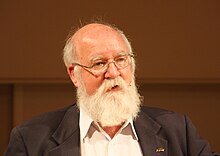
Daniel Dennett. Category: Philosophy. Distinction: Professor, author, cognitive scientist on topics of the philosophy of mind and the philosophy of science.

E.J.Coreyx240

Elias Corey. Category: Science. Distinction: Chemist responsible for massive developments in the field of organic chemistry, Nobel Chemistry Prize Winner.


Gary Snyder. Category: Literature. Distinction: Pulitzer Prize winner, influential poet.


Bill Watterson. Category: Media. Distinction: Reuben and Eisner-winner, influential cartoonist.


Carl Sagan. Posthumous. Category: Science. Distinction: Pulitzer Prize and Peabody winner, influential work in astrophysics, global warming advocacy, and SETI.


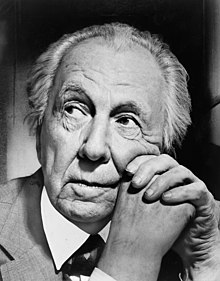
Frank Lloyd Wright. Posthumous. Category: Architecture. Distinction: Pioneer of organic architecture.

Wednesday, July 1, 2015

Making a Virtue of Being Low Class

In 2011 Groupon’s IPO was $15 billion. It was terribly popular, and still is doing OK, with a good showing in 2014, but, like stock in beanie babies, been declining ever since the initial bubble.

I never understood the Groupon thing. It was coupons. And growing up, I learned that coupons were for people who didn’t have the cash. Heck, even Weird Al, in his ‘Happy’ parody, ‘Tacky’, says: “Bring along my coupon book whenever I’m on a date” because of course that’s tacky. Coupons are lower-class.

Saving and sales are fine. Who cares if the rest of the world looks on with horror as we literally kill ourselves for Black Friday deals?

Since the recession we have begun, as a society, making a virtue of being lower-class. Black Friday was, not coincidentally, not a big deal until 2008 – before then it was growing, but not catastrophic. That was the first year someone died. And, like Groupon, it has been easing off, last year down 11%.

But it’s not just our shopping trends that have made America more low class.

Zagat, presumably attempting to be BuzzFeed, wrote an  article ’30 Awesome Grilled Cheese Sandwiches Across the US’ back in 2013, just around the time I’d noticed this same unusual trend. Gourmet grilled-fucking-cheese sandwiches. A lot of the food crazes in recent years have been low class comfort food, from Mac n Cheese, to bacon on Epic Meal Time; cupcakes to food trucks. We’ve made comfort foods and high-fat foods cultured.

One of the condescensions leveled at the hipster set was that they drank shitty, cheap beer like PBR. And bought their clothes second-hand. Thrifting became virtuous as well. Macklemore’s ‘Thrift Shop’ not only got the Grammy, but went to the top of the charts in 2013. Thrift shops, and Goodwill, used to be either ironically visited or shamefully visited by the middle class. A sign of being middle class was that you made donations to thrift shops – lower class people shopped at them.

And how many times, on online dating, have I seen “I just like to stay in and watch Netflix”? Sure, some people are just basic. But there’s more to it than that, because this social trend is often combined with an unpleasant dichotomy. You see, besides staying in, these potential mates also like to go out! It's true! And they say so! But no one can afford to do that anymore, so…let’s stay in and watch the new season of [whatever].

Thank God television is in a golden age now, because if it weren’t people might sit up and realize that if they wanted to go out they couldn’t afford it. Unless, perhaps, they go out for a grilled cheese sandwich…

Reality television is still going strong, although no longer the phenomenon it once was. Again, on the bilious world of online dating, you will often see a caveat-confession that “I also like some reality T.V. shows! Don’t judge! It’s a guilty pleasure!” And it should be guilty, because it is lowest common denominator television, most of the time. (Yes, I recognize that 'This Old House' is also reality T.V. – I get that it’s gradational.) But Reality TV once used to be looked down upon, consistently. And this brings us to the overlapping worlds of upper and middle class/lower class (which are economic definitions) with highbrow/lowbrow (which are cultural definitions).

There’s a marvelous chart from 1949, by Russell Lynes, that defines the differences between highbrow, lowbrow, and everything in between:


Where are we now except defiantly low-brow?

Note the pulps and comic books on the chart. Fantasy, comic book movies, and sci-fi have been the top-grossing films each year, every year, since 1998, with one exception (2000 – Mission: Impossible II). From Jaws (1975) to Titanic (1997), there’s still a lot of these movies as top-grossing offers, but they’re not every single year, and there’s variety in the movies that break this mold (1976 – Rocky, 1978 – Grease, 1986 – Top Gun, 1987 – Fatal Attraction, 1988 – Rain Man, 1995 – Die Hard with a Vengeance). Now what makes money in the film industry is low brow, low class.

Pride is the source of this.

Most Americans define themselves as middle class. But there is no more middle class – those who would actually qualify are vanishingly few, and getting smaller.

With less disposable income, more debt, and working lower-paying jobs, guess what? We’re all lower class now; and low-brow tastes, defined by our economic condition, have become the new ‘middle class’ virtues.

In other words, we have made a virtue out of being low class out of desperation, as an attempt to salvage our trammeled pride. We can still go out and have a good time. If we bring a coupon for Mac n Cheese. We still take a Saturday to go shopping and see a movie. If the movie is from a comic book, and the store is Goodwill. We still engage with Art. If it is a television show.

We’ve redefined pleasure, friendship, art, and culture to match our new economic straits. We even made a fashion out of poor grooming with beards being ‘in’ and ‘lumbersexuals’.
  

Which, as a frequently bearded fellow, I'm more okay with.

At the start I noted that a number of these trends are shifting. In part the pain of the recession is wearing off, and with it, trends and phenomenon are easing off. But don't be fooled - the middle class is still being extinguished. We're still not, in 2015, back to 2007 levels of income, levels which had only just then gotten back to 1999 levels. And the trend is not going up.

Much of it is out of our control. The initial passion for being lower-class is wearing off, but where does that leave us? Will we even be stripped of our pride?

So let’s be proud of being lower class! Let’s make sure our biggest purchases are in entertainment, not our future. Let’s cover ourselves in tattoos (once almost exclusively a lower-class distinction), instead of covering our expenses. Let’s make crafts, instead of investments.

To quote Aldous Huxley:

“Now–such is progress–the old men work, the old men copulate, the old men have no time, no leisure from pleasure, not a moment to sit down and think–or if ever by some unlucky chance such a crevice of time should yawn in the solid substance of their distractions, there is always soma, delicious soma, half a gramme for a half-holiday, a gramme for a week-end, two grammes for a trip to the gorgeous East, three for a dark eternity on the moon; returning whence they find themselves on the other side of the crevice, safe on the solid ground of daily labour and distraction, scampering from feely to feely, from girl to pneumatic girl, from Electromagnetic Golf course to …”

To where we are today. Distracting ourselves and re-branding ourselves to try and keep smiling as we drop another notch down the scale of the global middle class.

Here’s to being lower-class! Let us take our soma, distract ourselves from our fallen state, and rejoice in the proud virtues and traditions of the penny-pincher, the tacky, and the poor.