Monday, December 14, 2015

Tumblr

It seems more and more that instead of writing, on this blog and elsewhere, I have succumb to tumbling.  My tumblr account, which I enjoy a great deal, worries me somewhat, though.

Consider the last ten posts (as of this writing):

1. The outside of a stone building, Empire style, lit on a foggy evening by yellow-orange streetlamps.
2. A gifset of Prime Minister Trudeau addressing the Syrian refugees who are now Canadian citizens.
3. A notice which calmly informs us that the digital disruption has already happened.
4. Seven stills, self-cultivated, to lend understanding and appreciation to one of my favorite films, Solaris.
5. Photo of a pink, gold and periwinkle art nouveau fireplace from Catalonia, built in 1908.
6. Post praising Margaret Hamilton, who created the code for the moon landing.
7. An angry response, from me, directed towards a Rugrats comic about bananas.
8. Leaves.
9. Seven images of space stations as envisioned by seventies artists.
10. Panel from Romantically Apocalyptic - an artistically masterful web comic.

Does any of this hold any significance?

I sort of doubt it, and yet here I am, fiddling away my time reposting, liking, and creating content for this image-based monster. In August I mentioned that Charlie Brooker has been important to my life. This has been manifold. 1) He hates television even more than I do, which is rare, while still acknowledging that it can be great to which I concur, and has detailed this in his very good series "How Television Has Ruined Your Life", 2) Black Mirror - the Twilight Zone for our times, in which he wrote every episode except my least favorite, and, important for the purposes of this article, 3) A special which investigates "How Video Games Changed the World".

This latter piece drops a bombshell after a thoroughly enjoyable hour and a half, with a decidedly Black Mirror-esque spin. Done chronologically, not hierarchically, tune in around the 1:33:00 min mark:


For those without the powers of video his conclusion, in a series that ranges from Pong to Pac-Man, Doom to Grand Theft Auto, Sims to Minecraft, the most recent (as of 2013) video game, and the one that has arguably changed the world the most is...

Twitter.

"Twitter is a massively multiplayer online game in which you choose an interesting avatar, and then roleplay a persona loosely based on your own, attempting to accrue followers by repeatedly pressing lettered buttons to form interesting sentences."

And I thought: "Damn." Or rather, daaaaaaaaaaaaaaaaaaaaaaaaaaamn.

And, to be honest, since then, I can't see social media as anything more than a video game.

Don't get me wrong, games are fun sometimes. I spent a weekend in a cabin recently kicking my sister's butt at Trivial Pursuit. (Hi, Jess!) Games are well and good - but like all things, in moderation. And social networking for many, and I wager in this country most, adults it is not in moderation, but rather is all-consuming. I wonder if we would devote as much time to it if, instead of "social networking" we saw it as merely a game: frivolous, not creating value, an entertaining distraction or time-waster. Then again, perhaps we would still flock - goodness knows Candy Crush and Flappy Bird aren't unpopular, despite cultivating no skills, no intelligence, and arguably not really benefiting your life in any way when you play it. Brooker addresses why, given this lack of pragmatism, we do these things anyway:

"Each time Mario headbutts a block, he gets a coin; when he gets a hundred coins he gets an extra life. These perpetual little pats on the head compel you to bash those blocks for hours. By supplying a constant stream of fun-sized rewards social networking has, by accident, gamified whole aspects of our lives. Every second another little gold coin for you to collect: more followers, more retweets, compelling you to interact over, and over, again.

These are games we don't even realize we're playing."

Which brings me back to tumblr. It is damn satisfying to see something I post, anything, get reblogged by people I don't know. And it is quite disheartening when one of my little creations goes unnoticed (still no notes on my Solaris photoset...*frowny :( face* ).

If someone wanted to get rid of my account I would feel a pang, perhaps less so than if it were to happen to this blog, but still noticeable - because I've invested a lot of effort into my tumblr persona. And this game, tumblr, is one I've only played for a few months - I just started in May and I've made 620 posts this past month alone. I have 31 followers (far more than this blog). A gif I put up in the first days of the site has 497 notes...

No depth - none at all. It is as meaningless as the list of ten "representative" things I put above. This blog, on the other hand, has helped me plumb depths. And before anyone rails at me and says there is depth on tumblr - yes. Some people use it like a blog, and I can validate that. But that's not how I use it. I use it as a game, and in that regard, it is a dangerous, addictive, time-waster.

Now go follow me: http://mr-mousebender.tumblr.com/

Tuesday, November 24, 2015

Music Starter Pack

Are you unpopular? A 98 POUND WEAKLING? Could you get them to notice you if you only liked the right music?

"But," I can hear you say, "I have no idea what type of music I like! Now I will have acne forever!" Sob not, future pillow-biter!

Here are 100 albums and recordings to get you started on your path to Music Awesomination. In this starter set you'll find:

- Music recorded over 6 centuries!

- Chronological arrangement for easy browsing!

- A wide variety of genres for each decade!

- No repeated artists for maximum diversity!

- No Randy Newman!

Enjoy!

2010s

The Electric Lady by Janelle Monae, 2013
The Suburbs by Arcade Fire, 2012
Radio Music Society by Esperanza Spalding, 2012
Hadestown by Anais Mitchell, 2010
My Beautiful Dark Twisted Fantasy by Kanye West, 2010

2000s

Fox Confessor Brings the Flood, Neko Case, 2006
The Crane Wife, The Decemberists, 2006
Largo, Brad Mehldau, 2002
Original Pirate Material, The Streets, 2002
Don't Give Up on Me, Solomon Burke, 2002
Discovery, Daft Punk, 2001
Is This It?, The Strokes, 2001
Stories from the City Stories from the Sea, PJ Harvey, 2000
Tanto Tempo, Bebel Gilberto, 2000
Who Is Jill Scott? Words and Sounds Vol. 1, Jill Scott, 2000

1990s

Global Underground 013: Ibiza, Sasha, 1999
The Velvet Rope, Janet Jackson, 1997
Jagged Little Pill, Alanis Morissette, 1995
Illmatic, Nas, 1994
Grace, Jeff Buckley, 1994
The Next Hundred Years, Ted Hawkins, 1994
My Life, Mary J. Blige, 1994
A Meeting by the River, Ry Cooder and VM Bhatt, 1993
Anodyne, Uncle Tupelo, 1993
I've Got That Old Feeling, Alison Krauss, 1990

1980s

Paul's Boutique, Beastie Boys, 1989
Tracy Chapman, Tracy Chapman, 1988
It Takes a Nation of Millions to Hold Us Back, Public Enemy, 1988
Appetite for Destruction, Guns n Roses, 1987
Graceland, Paul Simon, 1986
Purple Rain, Prince, 1984
Shoot Out the Lights, Richard and Linda Thompson, 1982
Thriller, Michael Jackson, 1982
My Life in the Bush of Ghosts, David Byrne and Brian Eno, 1981
Back in Black, AC/DC, 1980

1970s

The Koln Concert, Keith Jarrett, 1975
Rubycon, Tangerine Dream, 1975
Talking Book, Stevie Wonder, 1972
The Rise and Fall of Ziggy Stardust and the Spiders from Mars, David Bowie, 1972
Pink Moon, Nick Drake, 1972
What's Going On, Marvin Gaye, 1971
Led Zeppelin IV, Led Zeppelin, 1971
The Inner Mounting Flame, The Mahavishnu Orchestra, 1971
Pieces of a Man, Gil Scott-Heron, 1971
Tea for the Tillerman, Cat Stevens, 1970

1960s

Trout Mask Replica, Captain Beefheart, 1969
Sgt. Pepper's Lonely Hearts Club Band, The Beatles, 1967
I Never Loved a Man the Way I Love You, Aretha Franklin, 1967
Pet Sounds, The Beach Boys, 1966
Highway 61 Revisited, Bob Dylan, 1965
A Love Supreme, John Coltrane, 1964
Live at the Apollo, James Brown, 1963
We Shall Overcome, Pete Seeger, 1963
Breakfast at Tiffany's: Music from the Motion Picture, Henry Mancini, 1962
Two Steps from the Blues, Bobby 'Blue' Bland, 1961

1950s

Kind of Blue, Miles Davis, 1959
Gunfighter Ballads and Trail Songs, Marty Robbins, 1959
The Genius of Ray Charles, Ray Charles, 1959
My Fair Lady: Original London Cast, Alan Jay Lerner and Frederick Loewe, 1958
Here's Little Richard, Little Richard, 1957
West Side Story: Original Broadway Cast, Leonard Bernstein and Stephen Sondheim, 1957
Ellington at Newport, Duke Ellington, 1956
Elvis Presley, Elvis Presley, 1956
Black Coffee, Peggy Lee, 1956
In the Wee Small Hours, Frank Sinatra, 1955

1940s-20s

The Anthology (1947-72), Muddy Waters, 1947-72
Appalachian Spring, Aaron Copland, 1944
Stormy Weather Soundtrack, Original Film Cast, 1943
Dust Bowl Ballads, Woody Guthrie, 1940
The Famous 1938 Carnegie Hall Concert, Benny Goodman, 1938
King of the Delta Blues Singers, Robert Johnson, 1936-37
Ziegfeld Follies of 1936, Ira Gershwin and Vernon Duke, 1936
Anything Goes: Original London Cast, Cole Porter, 1935
Complete Hot Fives and Sevens, Louis Armstrong, 1925-30
Rhapsody in Blue, George Gershwin, 1924

Pre-1920s

From Argentina to the World, Carlos Gardel, 1917-35
The Rite of Spring, Igor Stravinsky, 1913
La Mer, Claude Debussy, 1905
21 Favorite Arias, Enrico Caruso, 1902-21
Transfigured Night, Arnold Schoenberg, 1899
The Nutcracker, Peter Tchaikovsky, 1892
The Pirates of Penzance, Gilbert and Sullivan, 1879
Carmen, Georges Bizet, 1875
Der Ring des Nibelungen, Richard Wagner, 1869-76
Symphonies, Ludwig van Beethoven, 1800-24
Die Zauberflote, Wolfgang Amadeus Mozart, 1791
"Sun" Quartets, Opus 20, Josef Haydn, 1772
St. Matthew's Passion, Johann Sebastian Bach, 1727
Yemenite Songs, Ofra Haza, ~1720
Three Ragas, Ravi Shankar, ~1660
L'Orfeo, Claudio Monteverdi, 1607
Music for the Gods: The Fahnestock South Sea Expedition, Various Performers, ~1600
Missa Papae Marcelli, Palestrina, ~1562
Missa Herculares Dux Ferrariae, Josquin Des Prez, ~1480
Motets, Guillaume de Machaut, ~1377
A Feather on the Breath of God, Hildegard von Bingen, ~1179
Monastic Song: 12th Century Monophonic Chant, Peter Abelard, ~1142
The Spirit Cries: Music from the Rainforests of South America and the Caribbean, Various Performers
China: UNESCO Collection, Various Performers
Aka Pygmy Music, Various Performers

Thursday, November 5, 2015

President's Rankings - Worst Ten


And now, to complete the list, here are the ten worst:


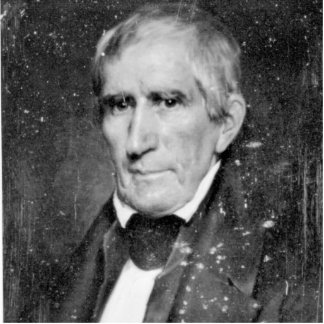
10. William Henry Harrison, Whig. Known for: Shortest Presidency.

Presidential Legacy: Died within the month. That’s it.

Perhaps it’s not fair to critique a President who died of flu 30 days in. He is the first of the (terrible) Whig Presidents (on this list).


09. Millard Fillmore, 1850-1853. Whig. Known for: A lot of the bad stuff before the Civil War.

Presidential Legacy: Oversaw the Compromise of 1850, and the Fugitive Slave Act. Failed Presidency saw the dissolution of his party into the aptly-named ‘Know Nothings’.

The last (terrible) Whig, Fillmore inherited the position when Zachary Taylor died. Much of the tension that would lead to the Civil War began heating up under his tenure.


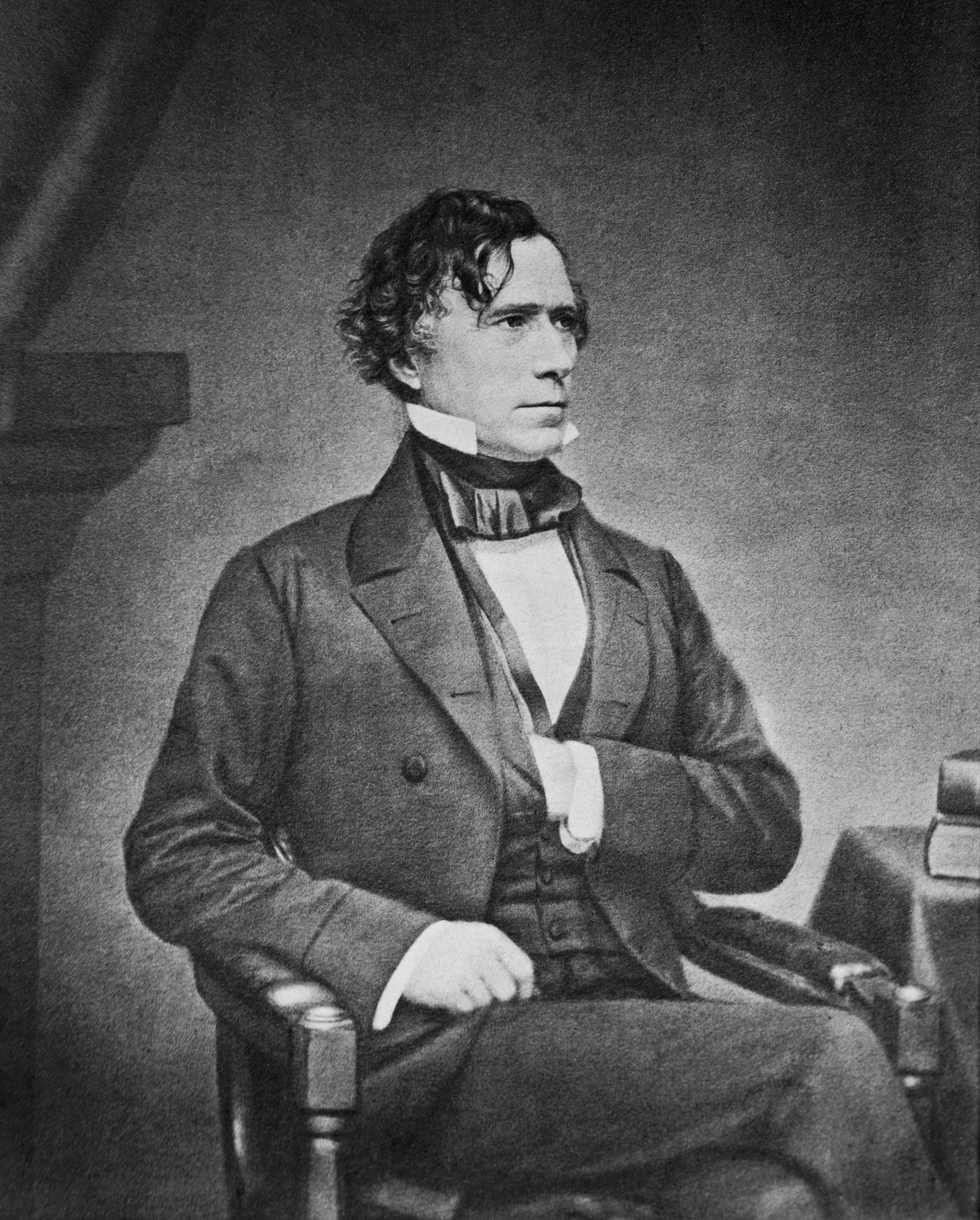
08. Franklin Pierce, 1853-1857. Democrat. Known for: Hating abolitionists.

Presidential Legacy: Kansas-Nebraska Act / Bleeding Kansas, Gadsen Purchase, Using federal troops to enforce the Fugitive Slave Act. Halted the building of the Washington Monument.

Granted only one term, Pierce made the secessionist situation, begun under Fillmore, a whole lot worse. This is a man who appointed Jefferson Davis Secretary of War.


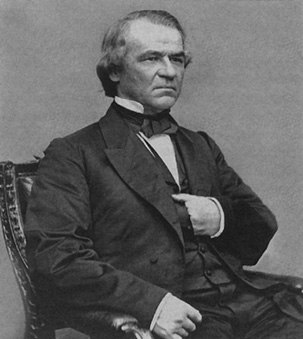
07. Andrew Johnson, 1865-1869. Democrat. Known for: Screwing up Reconstruction.

Presidential Legacy: Fought nonstop with Congress leading to his Impeachment, Purchased Alaska, Veto of the First Reconstruction Act. Oversaw 14th Amendment passed, and 15th begun.

After Lincoln’s assassination it fell to Southern Democrat Johnson to carry out the late Northern Republican’s vision. Needless to say, it went very badly, largely due to his megalomania.


06. Herbert Hoover, 1929-1933. Republican. Known for: Hoovervilles.

Presidential Legacy: Lack of intervention during the Great Depression/'Volunteerism', Most policies not enacted, Bonus Army - Firing on US troops demanding benefits. But helped Glass-Steagall pass.

The classic example of laissez-faire theory gone wrong, Hoover did little to help as Americans tried to cope with the Depression. One of the few examples of trying to help was to create Hoover Dam.


05. Warren G. Harding, 1921-1923. Republican. Known for: Dying in office.

Presidential Legacy: Established Veteran's Bureau, Teapot-Dome Scandal, Administrative corruption/fraud. He had a number of affairs, some only recently confirmed.

Harding had the odd view of letting each member of his cabinet do what they was best, and basically running amok. With his administration’s failures the beneficial Progressive era officially ended.


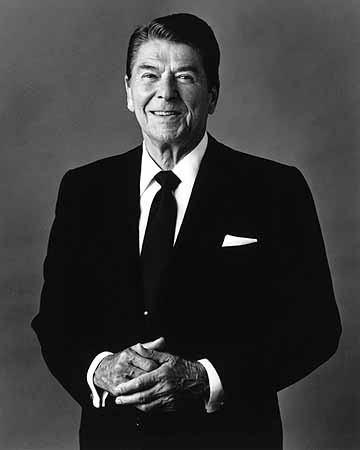
04. Ronald Reagan,1981-1989. Republican. Known for: Being an actor.

Presidential Legacy: Iran-Contra Affair, Reaganomics: widening of rich and poor gap/greatest national debt in history/Wall Street deregulation, 'Star Wars' Defense Project, War on Drugs.

Reagan revitalized a Republican party that could have died out with Nixon. Although charismatic, he damaged the middle class economy, ruined international standing, and fought organized labor.


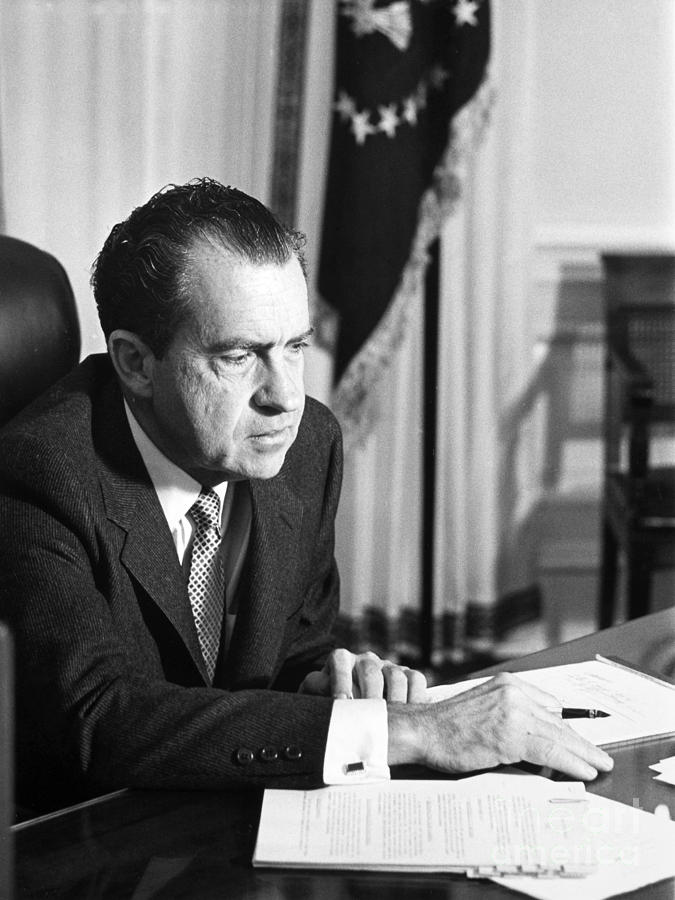
03. Richard Nixon, 1969-1974. Republican. Known for: Watergate.

Presidential Legacy: Escalation of Vietnam to include Laos and Cambodia/Removal of troops from Vietnam, Equal Rights, Chinese and Soviet Diplomacy. Used the ‘Southern Strategy’.

For a man to openly court white supremacists to get elected is bad enough. His lying, paranoia, megalomania, and attempts to sabotage peace talks with Vietnam under Johnson put Nixon near the bottom.


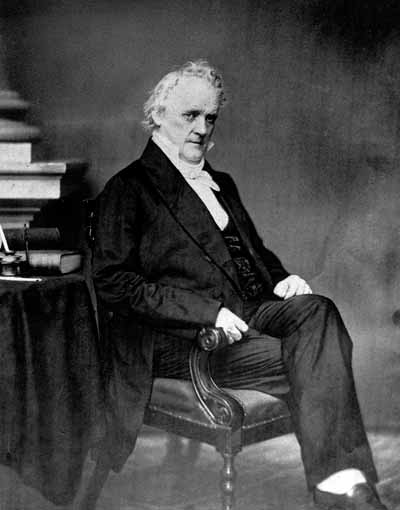
02. James Buchanan, 1857-1861. Democrat. Known for: The collapse of the Union.

Presidential Legacy: Dred Scott Decision, Panic of 1857, Utah War, Deadlocked Congress. Also, you know, watching the country fall apart at the Southern States began secession.

In 1860 the Confederate States split from the Union. For the rest of his term Buchanan did: nothing – not getting troops ready for the now inevitable war, excepting the attack on Fort Sumter.


01. George W. Bush, 2001-2009. Republican. Known for: War on Terror.

Presidential Legacy: Response to 9/11 by invading Afghanistan, War in Iraq and “Weapons of Mass Destruction”, PATRIOT Act, Guantanamo, Homeland Security/Wiretapping, No Child Left Behind, Hurricane Katrina response, Environmental Record - Refusal to implement Kyoto Protocol, Office of Faith-Based Initiatives, Stem Cell Research Veto, Secure Fence Act, Economic Crisis of 2008. All of this of course ballooned the deficit and national debt, while giving tax breaks to the wealthy.

He began as a lame duck, with record-breaking vacation days following the total lack of a mandate caused by the disastrous 2000 Election. Then he destroyed pretty much everything.


Tuesday, November 3, 2015

Presidents' Rankings - Top Ten


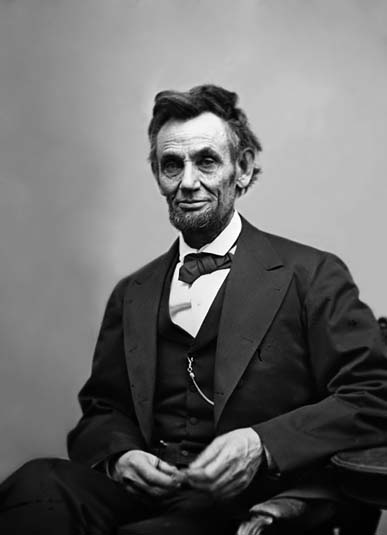
01. Abraham Lincoln, 1861-1865. Republican. Known for: Gettysburg Address.

Presidential Legacy: Leadership during the Civil War, Emancipation Proclamation and 13th Amendment ending slavery, Reconciliation, Assassination. Made Thanksgiving a holiday.

I mean, come on - Lincoln had to keep this nation from ripping itself apart. He freed the slaves and reconciled the Union and Confederacy and began planning Reconstruction.


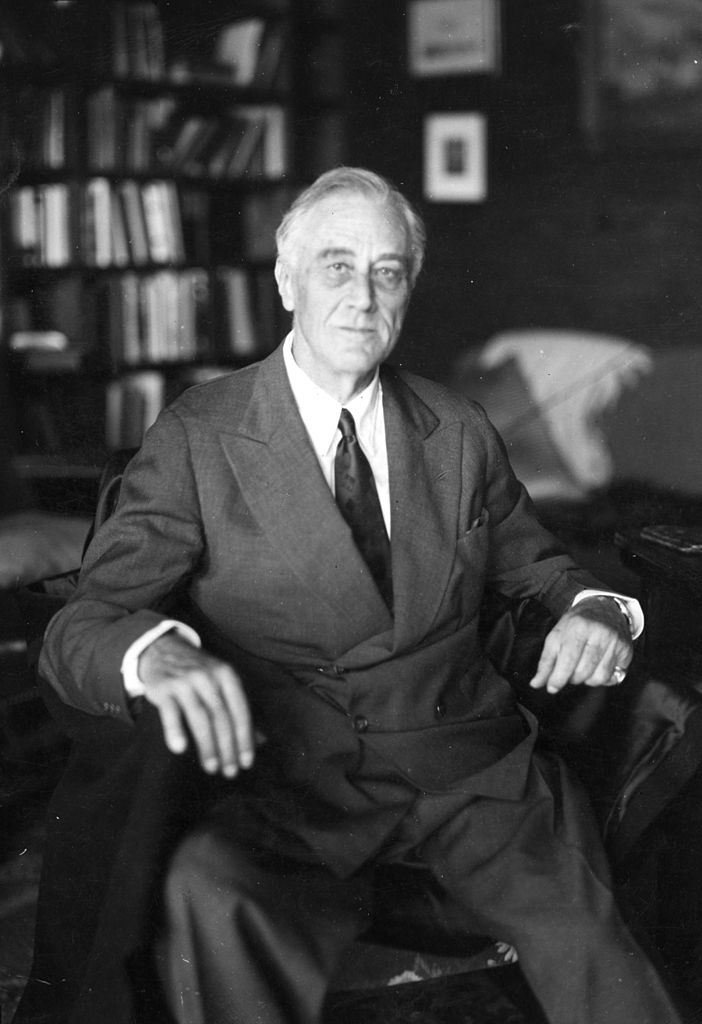
02. Franklin Delano Roosevelt, 1933-1945. Democrat. Known for: The New Deal

Presidential Legacy: New Deal - Lowered unemployment and raised the GDP while lowering the national debt, WWII intervention and leadership, Internment Camps, Only president elected to four terms.

Besides the Civil War and slavery, surely the Great Depression and World War Two were the two greatest challenges we ever faced. The man didn't even have use of his legs.


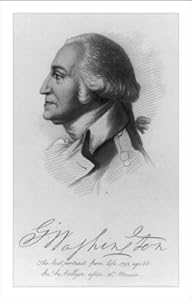
03. George Washington, 1789-1797. No Party. Known for: First President.

Presidential Legacy: Set the two term precedent, Invented the idea of a cabinet, Whiskey Rebellion, Jay Treaty reestablishing relations with Great Britain.

He set the tone for the Presidency, showing the Federal Government under the new Constitution wouldn't be a repeat of the Articles of Confederation. And rebuilt the country after the Revolutionary War.


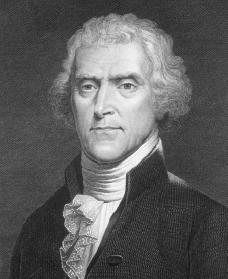
04. Thomas Jefferson, 1801-1809. Democratic-Republican. Known for: Louisiana Purchase.

Presidential Legacy: Barbary Coast War - America's first conflict, Lewis and Clark Expedition, Assimilation policy for Native Americans and Tecumseh's War.

By doubling the size of the country, Jefferson transformed the US into a continental power. He also had to deal with America's first big conspiracy with Wilkinson and Burr.


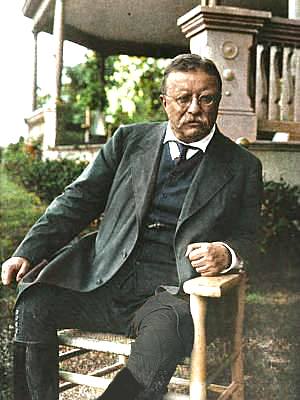
05. Theodore Roosevelt, 1901-1909. Republican. Known for: Panama Canal.

Presidential Legacy: Trust busting, Pure Food and Drugs, Conservation and National Parks, Roosevelt Corollary. First American to win a Nobel Peace Prize for arbitrating the Russo-Japanese War.

The most recent of the Mount Rushmore Gang, Roosevelt defined the Progressive agenda that would define 20 years of American policy. Also lays claim to a number of Presidential 'firsts'.


06. Woodrow Wilson, 1913-1921. Democrat. Known for: League of Nations.

Presidential Legacy: Creation of the Federal Reserve, Approval of racial segregation, WWI intervention, 19th amendment - Women's Suffrage.

Wilson had to get involved in World War One, and afterwards redefined how Western nations viewed war and its aftermath. Unfortunately his stroke meant his Presidency ended on a whimper.


07. Barrack Obama, 2008-present. Democrat. Known for: Obamacare.

Presidential Legacy: LGBT Rights, Handling of the Financial Crisis, Deescalation of Iraq and Afghanistan, Further encroachment of NSA wire-tapping, Bin Laden, Cuba, Prison and drug reform..

Despite the worst Congress in US history, he pushed through a significant Progressive agenda. Inheriting the worst Presidential legacy, and turning it around, was quite the feat.


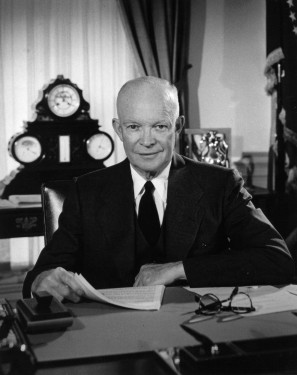
08. Dwight Eisenhower, 1953-1961. Republican. Known for: Golf.

Presidential Legacy: Sent first soldiers to Vietnam, CIA coups overseas, Nuclear stockpiling, Creation of NASA, Interstate highways, Little Rock, Alaska and Hawaii. Liked taxing the wealthy.

The last of the Lincolnian Republicans, Eisenhower saw the Federal government as a way of increasing prosperity - which he did for all Americans. His foreign policy decisions were less ideal(istic).


09. Harry Truman, 1945-1953. Democrat. Known for: Hiroshima bombings.

Presidential Legacy: Truman Doctrine - Communist containment, Creation of the US Air Force and CIA, Support of NATO, the UN and Israel, Korean War. After WWII began America's desegregation.

Truman is slowly coming round for historians, as blame for an inevitable Cold War is no longer on his shoulders. Instead he's lauded for rebuilding Western Europe and setting the tone for Civil Rights.


10. (tie) John F. Kennedy, 1961-1963. Democrat. Known for: Assassination.

Presidential Legacy: Bay of Pigs Fiasco, Cuban Missile Crisis, Partial Test Ban Treaty, Escalation in Vietnam, Peace Corps and Civil Rights. His Playboy affairs likely included Marilyn Monroe. 


10. (tie) Lyndon Johnson, 1963-1969. Democrat. Known for: Civil Rights

Presidential Legacy: Reaction to the Free Speech Movement/Counterculture, National Endowments for the Arts and Humanities, Medicare and Medicaid. Overseas he furthered involvement in Vietnam.

The combined Kennedy/Johnson administration has a core of idealism - going to the moon, a Great Society, the Voting Rights Act. But both Presidents had significant drawbacks: escalating Vietnam and being ineffectual. Each of these drawbacks, ironically, is countered by the actions of the other - Johnson was more effectual than Kennedy, and Kennedy wouldn't have heightened Vietnam.

Saturday, October 17, 2015

The Bible II

The Bible II

Genesis II
Chapter 1

After Revelations there was God, Jesus, and the Holy Spirit. Heaven was crowded, and nobody would stop singing.

“We’re going to do this again.”

“Dad, no.”

“I can do better this time. This time I’m not going screw up. Holy Spirit, your thoughts?”

“…”

Chapter 2

And so God created the universe from a vast explosion. Before this there was nothing – neither time nor space. But with this explosion there was time and space, which, it turns out, are the same thing. And His law became the law of the universe, and it really wasn’t that metaphorical. And these laws he dubbed gravity, strong, weak, and electromagnetic.

In the first three minutes, hydrogen and helium protons formed, the base elements which comprise 98% of the universe. But it would take another 377,000 years for them to form actual atoms.

Chapter 3

Around 560 million years after the Big Bang, or more than 13 billion years ago (as of the writing of this text in 2015, which, incidentally, is written by humans, inspired by God, but, to clarify, is subject to change not due to fallibility but due to limited human understanding of the cosmos at this unique juncture in cosmic time) the stars formed.

Chapter 4

“Why are you writing a science textbook of the early universe?”

“Well you have to start with Genesis…”

“I’m with Jesus on this. The humans will need to figure out science on their own. They can’t just be told ‘and then there were atoms.’ It doesn’t have any meaning.”

“Well metaphor is what screwed up everything last time, coupled with a lack of understanding of scientific cause and effect.”

“Just trim it down to the basics.”

Chapter 5

Everything exploded into being. A very long time ago. Because God said so.

Chapter 6

One of the things that came about from the explosion was stars and planets. On God’s favorite planet, the conditions were perfect for life, for God wanted it to be that way. And then, in Africa, people showed up.

Chapter 7

“Showed up?”

“You said to simplify! So here I AM. Simplifying. Gonna skip all the evolution stuff.”

“You can do better, Dad.”

<*omniscient sigh*>

Chapter 7

And God first created life in the form of the unseeable,

Chapter 8

“Unseeable? You’re making up words!”

“That’s My right.’”

Chapter 9

and the small forms grew and combined and copied and transformed and became complex, and beautiful. And life spread across the planet, from barren desert to desolate waste, from forest and dale to the deepest sea. And, after billions of years, one animal life came to be God’s favorite, and this was Man.

Chapter 10

“No.”

“No.”

“What?”

Chapter 11

And, after billions of years, one animal life came to be God’s favorite, and this was Man. Humanity.

Because, to make this very clear from the start, men and women are equals. And they formed tribes and slowly, originating in Africa 200,000 years ago, began to move across the land, to all places that would support their life.

Also there was evil.

Chapter 12

“I don’t know if you’re taking this seriously.”

“Well, I certainly didn’t want to write this thing by committee! It was easier before when it was just me.”

“Technically it still is.”

“Shut up.”

Chapter 13

Fine. So humans did stuff God didn’t like, and they needed to stop that. Like killing each other for no reason. Harming each other. Acting, basically, like animals. The whole reason God loves you humans better than anyone is for your reason. That’s what makes you special and you should really be able to figure out that line of reasoning.

Chapter 14

“Subtle.”

“I’m not so sure…”

Chapter 15

As they left Africa humans encountered other kinds of humans, like Neanderthals. And they learned from them, slept with them, and killed them. Killed them dead. Also: hobbits in Indonesia!

In certain parts of the world the climate and soil was great for farming, and there were animals to be domesticated and really, the humans who ended up in those places basically got a huge leg-up. Sorry to the rest of y’all. ‘Cause they are going to come to where you live and screw you over badly.

Chapter 16

“Listen, we’re trying to avoid the mistakes of last time, right?”

“Yeah.”

“So let’s make sure they’re all equally capable of surviving and don’t go tribal and kill each other when they meet new people.”

“Guys – I can’t. That would mean getting rid of their free will.”

“Like Jesus said – we’re trying to avoid mistakes this time.”

“I can’t get rid of free will! What’s the point? They won’t make bad decisions any more!”

“Right.”

“They won’t be punished!”

“Good.”

“There won’t be any sin!”

“And…?”

“…And you guys just don’t get the point of this. The point of Earth and humans isn’t to watch it tick away like a clock always knowing the next motion. It’s to be surprised by what they’re going to do next! They’ll come up with bizarre ideas and crazy theories, insanely brilliant inventions that have no practical function and artistic masterpieces! They’ll treat each other horrifically and sublimely. Watching it play out is the whole point.”

“Then why do you punish them?”

“To control the experiment! The parameters by which the efficacy is judged.”

“Dad… How many more times are you going to do this?

“As many as it takes.”

“…”

“Let’s put the book away for a while, okay? Maybe pick up with Exodus next time.”

Sunday, October 4, 2015

Halloween Month

So, we start complaining about Christmas being a month long in November, the day after Thanksgiving. (Well, not the day after, of course – then we are too worried about people being trampled to death at Wal*Mart.) But, and this may just be my friend base, October 1st rolls around everyone is getting excited about Halloween.

Now, I’m an atheist, but I don’t really mind the month of Christmas. I like carols, and Victorian Christmas hymns in minor keys, and the general concept of good things in dark times. I like eggnog and Currier and Ives and all that shit.

And I like Halloween.

But, since people in my Millennial bracket are freaking out about Halloween, I’m a little concerned. As a kid it makes total sense why Halloween is so great – you get to break the cardinal rules of childhood. You literally ask strangers for candy. Candy you will eat late at night. After you dress up as a scary thing, and lie about being someone you are not, while threatening the neighbors.

Don’t mistake me – I am well aware that the adult Halloween party is not some new phenomenon. But, are we, like, more into it than before? Even my middle school students aren’t this excited. It used to be something we looked forward to the week of, perhaps. But now it’s a month-long thing. And for adults (I really, really hope) there’s no trick-or-treating involved; unless we’re the ones doling out the candy. It’s really just the dress-up and mood that most folks seem to be intrigued by.

After a few years on the East Coast I get the appeal of a gnarled denuded tree in the Autumn moonlight. There’s something special about that. But is this Halloween love another example of the inability of Millennials to grow up? We still want to dress up and eat candy at 30, and, since that’s still too weird for week-to-week behavior, we freak out and get overly excited when October rolls around? I think it is a Millennial issue.

In 1979 Etan Patz disappeared on the way to school. It was a huge story – there had been child abductions before, but this one broke the national conscience. His face was the first one on a milk carton. The day of his abduction is National Missing Children’s day, May 25.

Six months before, the character of Michael Myers was introduced to the world in Halloween. Throughout the 1980s I think the conflation of Halloween as genuinely dangerous and a concern over unsafe children made for a new cultural climate surrounding the holiday. I mean, in 1985 60% of parents thought their child was at risk from poisoned Halloween candy. These were the over-protective Boomer parents and the earliest Gen X parents, whose own youths could keep a psychology convention occupied for a month. They had such screwed up childhoods, it’s no wonder they freaked out over parenting. And all of a sudden the fun rule-breaking, once a year, for kids to take stranger’s candy and be out late at night, became an area of serious worry and anxiety.

It’s obvious that for the Millennials, whose childhoods were mostly spent in the late 80s and 90s, it was a time of inordinate post-Cold War optimism and triumphalism. Polls indicate that tension surrounding the holiday abated, after a decade of concerns didn’t pan out. We instead grew up with The Nightmare Before Christmas, Hocus Pocus, Casper, and the Addams Family. Things just seemed safer. Halloween wasn’t the scary time it was ten or fifteen years earlier – with fears of poisoned apples and child abductions.

As Millennials grow older, and look back with longing on their childhoods – a generation that fears in its core that its best days are already behind them – Halloween has become a celebration of that better childhood. Our teens were ruined by the Bush era insanity, and the terrorism concerns of a post-9/11 world. Our twenties were devastated by the economic collapse. After 40 years of stupidity and mismanagement Millennials are way behind the Boomers in life accomplishments at the same age.  (Millennials now average around $35,000 a year, according to recent data. In 1978 dollars, that’s around $10,000. And the actual median household income in 1978 was $15,000.)

…Somehow this has something to do with Halloween.

Right, to recap: Millennials are weirdly obsessed with Halloween because the holiday is associated with childhood, and this generation had a particularly blessed childhood, especially in comparison to their teens and twenties. So since literally acting like a child isn’t yet acceptable (but keeps creeping in on the cultural more and more as many have pointed out) we’ve begun to fetishize October as a whole month, but I don’t think we’re culturally cognizant exactly as to why. We all really like Halloween, but few can give a particularly convincing answer, I don’t think, beyond ‘it’s fun’. Why is it so fun?

To answer this, finally, I think the dress-up is a big part of it. Many of us, getting on into an adulthood we are loathe to accept, enjoy the comfort of pretending to be someone we are not. Again, costume parties aren’t something new. In the 1950s adults dressed up on trumped-up pretexts and pretended to be someone else and let their hair down. Masquerade balls go way, way back. I think it comes and goes. Right now it’s approaching a weird high-water mark.

Perhaps it’s not so weird, though, given all the aforementioned. Perhaps Halloween is when we let our imaginations take flight.

This generation is just now feeling the wind pick up, and getting themselves out of the doldrums of a largely wasted decade. The debt and burdens are still there, but we’re coping a little better now than, say, we were from 2009-2012. Perhaps as we enter our thirties properly our Halloween interest will gracefully decline. The nostalgia for our childhoods will dissipate as we recognize that our best days are ahead of us, and not behind.

Or, maybe, we’ll be a bunch of grown-ass adults who eat mac n cheese and watch cartoons. I don’t know.


Anyway. Here we are. It’s October and Halloween month has begun.

Saturday, October 3, 2015

Animals

John Berger is an English academic, who, in 1972, put out a very influential collection of essays,Ways of Seeing. One of his essays that most influenced me is “Why Look at Animals” (you should click the link to read it - it’s great). The essay deals with the distancing of humans from nature, the Iliad and language, anthropomorphism, domestication, capitalism, and why going to zoos makes us sad. And, born in 1926, Berger is still alive. 
I would love to know his views on memes and the roles of animals online. Ever since the net has been a thing, Berger’s books have shied away from it. His main focus, and, to be fair, the main focus of Ways of Seeing, is photography. But his essay on how we view animals is a landmark. In 2009 Penguin Classics chose to include it as their most chronologically recent selection in their 100 Great Ideas series - a list that includes writings by Orwell, Darwin, Confucius, and Plato. It’s worth revisiting, I feel - especially now that, in the 21st century, our interactions with animals are shifting all the more.
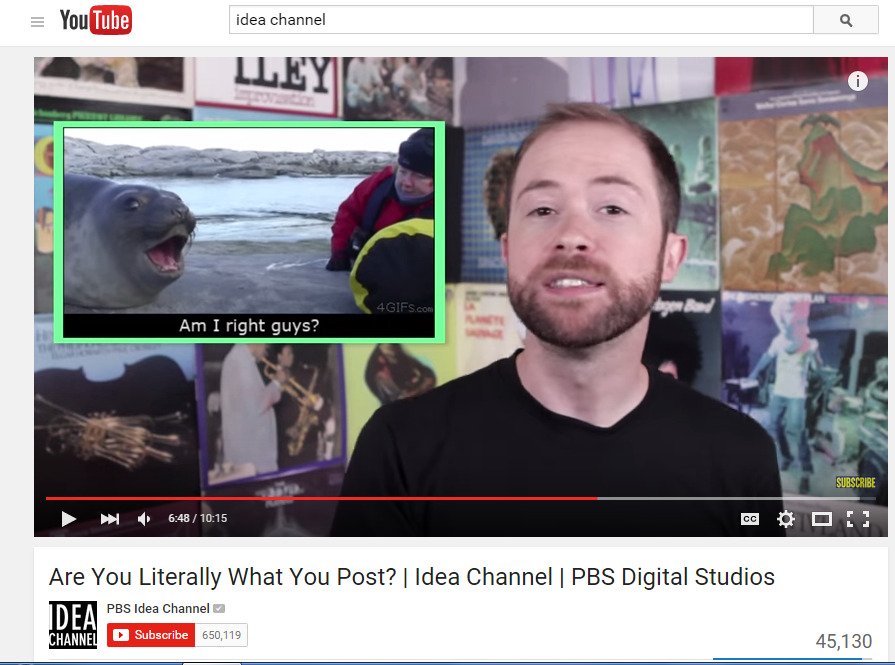
Or are they? Have we changed the means by which we look at animals, and as a consequence think about them, but not in a fundamental way? Idea Channel has a recent video up which prompted these musings, on self-identity and posting. Around six minutes in this image happened:
and I was struck by how often we see images like that seal. We use animal stand-ins for the self constantly. Of course, in the internet meme era, we use all sorts of other things to stand in for the self - such as cartoon drawings. But in light of Berger I feel the unique relationship humans have towards other animals - all those thousands of years of accumulated history and relations, makes the animal meme something special. Perhaps that’s why they quickly became so popular in the first place.
Thoughts?