Friday, March 17, 2017

National Film Registry 2017

Way back in 2014 I came up with twenty-five National Film Registry recommendations. Four of those recommendations have been added (well, one was added back in the 1990s, and somehow eluded me). They are:

The Big Lebowski, 1998 – Added in 2014
The Old Mill, 1937 – Added in 2015
Paths of Glory, 1957 – Added in 1992
The Princess Bride, 1987 – ​Added in 2016

So that's nice. Most of my list remains unchanged, however. Even so, my four new replacement films are found below (along with the holdovers) marked in red.​

1776 – narrative feature, 1972.
Apollo 11 Moon Landing Footage – documentary, 1969. Why?: Is the first film shot on another celestial body.
Army-McCarthy Hearings – newsreel, 1954. Why?: Documents a critical moment in American politics.
Camille – narrative feature, 1936.
The Cat Concerto – animated short subject, 1947. Why?: Exemplifies the Tom and Jerry shorts that won seven Academy Awards.
Clerks – narrative feature, 1994.
Closed Mondays – animated short subject. Why?: Exemplifies Will Vinton’s very influential Claymation style.
Der Fuehrer's Face – animated short subject, 1942. Why?: Exemplifies WWII anti-Nazi propaganda.
Everything Will Be OK – animated short subject, 2006. Why?: Typifies Don Hertzfeldt’s popular animation style.
F for Fake – documentary/narrative feature, 1973.
Fiddler on the Roof – narrative feature, 1971.
Hearts and Minds – documentary, 1974. Why?: One of the most influential American documentaries of the 1970s, with extensive footage of the Vietnam War.
I Like America and America Likes Me - experimental film/short subject, 1974. Why?: One of the defining moments of performance art by Joseph Beuys.
Jurassic Park – narrative feature, 1993.
Meat Joy – experimental film/short subject, 1964. Why?: One of the defining moments of performance art by Carol Schneemann.
The Mind’s Eye: A Computer Animation Odyssey – animated short subject, 1990. Why?: Was a pioneer in computer animation technology.
Monterrey Pop – documentary, 1968. Why?: Documents the first great American rock festival, before Woodstock.
My Dinner with Andre – narrative feature, 1981.
President Nixon's Resignation Speech – newsreel, 1974. Why?: Documents a critical moment in American politics.
Street of Crocodiles – animated short subject, 1986. Why?: Magnum opus of influential stop-motion artists the Brothers Quay.
Superman – animated short subject, 1941. Why?: Was the first film adaptation of the comic book icon, heavily influencing future depictions.
Treasure Island – narrative feature, 1950.
Tron – narrative feature, 1982.
The Truman Show – narrative film, 1998.
Twice Upon a Time – animated feature film, 1983. Why?: Only example of a feature-length animation to use lumage.

Sunday, March 12, 2017

The Great American Experiment

Around ten years ago I took a class on democracy which afforded me a chance to read Alexis de Tocqueville's 1835 work "Democracy in America". I'd certainly heard the phrase before reading the work, but it was a passage from the Frenchman, the closing words of the first chapter, which brought the notion into the general lexicon:

"In that land the great experiment was to be made, by civilized man, of the attempt to construct society upon a new basis; and it was there, for the first time, that theories hitherto unknown, or deemed impracticable, were to exhibit a spectacle for which the world had not been prepared by the history of the past."

That experiment is our democracy. Notice - although De Tocqueville mentions the idea of America's democracy as an experiment multiple times throughout his tome, he never once uses the precise phrase "the great American experiment". And of course it is telling that this is the metaphor he applies, in the 1830s, as the Western world was moving from the heady Enlightenment days into the scientific era of the nineteenth century. 

Is America an experiment? Or is it an idea? Or, as the President would have it, a simple geography: "A nation without borders is not a nation"? (The latter seems almost certainly to be not the case. Many definitions of nationhood are not geographically bound.) For my money, I think America is an experiment - ideas are too nebulous. Jefferson and Franklin were tinkerers, experimenters, they were looking at how to improve the world. And the experiment metaphor backs that nicely. An idea, by contrast, can be all sorts of unpleasant things. To quote from an old Disney cartoon, the state of one's mind can be quite a mess of lousy ideas: "Antiquated ideas, bungling, false concepts, superstitions, confusion..." Not to mention even more disconcerting fare, such as prejudices. Experiments propel us forward, but ideas can be clung to, statically, unchanging. People can hold all sorts of crummy ideas. Experiments are more rigorous - certain aspects of America must be tested for the experiment to continue.

So rather than have America as an idea, or ideal, let's resuscitate America as experiment. With it we will need to agree to a few hypotheses to test out. Isolate some variables. Measure results. Draw conclusions.

Originating in the heady days of the late 1700s, I think it's fair to suggest the reason we started this experiment is to create the best possible form of government, to serve the demos - the people. Democracy has a way of coupling with Utilitarianism. What is best for the majority is best for the country. Or if you prefer, use the unique leverage of democratic statecraft to minimize suffering and improve the general welfare - without a tyranny of the majority stripping rights from minorities.

That's our hypothesis - the state serves the people, not the king or ruler. The greatest benefit for the people needs to be sought. That which does not work towards this end is to be discarded, or destroyed.

Imagine a simple science experiment: You are trying to find which type of food is most nutritious for hamsters. You may hypothesize....*quickly looks up hamster facts*...seeds, grass, and small insects are best. But you'll try other things. Perhaps Twinkies are the ideal food for hamsters, only they've not had sufficient access to the sweet treats in the wild. Now, I suspect feeding hamsters Twinkies would be a disaster. But you could try. And, sure enough, when Wiggles gets very ill, you could return her to a diet of grass and seed.

What you don't do - is keep trying Twinkies.

When something doesn't work you can try again, I guess. But if Snuffles, Fancy-Pants, Mr. Big Bottom, and Whiskers all also get sick you should stop. You have proven the point - it doesn't work. Continuing to stuff hydrogenated soybean cake into their gullet at this point is just cruelty.

Liberals often make this sort of argument for America's experiments in the past forty years. Trickle-down economics doesn't work. You don't have to keep trying - and not only that, but doing so is cruel, given the consistently harmful results we've experienced over the past four decades. The experimental ethos for America is beneficial, therefore, because it should allow us to discard the crappy ideas that don't work.

Charles Lindbergh was a big hero when he flew across the Atlantic. But then he though fascism was just nifty, and his reputation has been crippled ever since. And he was not the only one - lots of Americans thought Hitler was neat-o, and we look back at them with disdain usually reserved for cockroaches and Congress. The communist menace was certainly a real concern that seemed justified - no one in the States wanted the Soviets to have nuclear capabilities or to be spying on us. Fair enough. But McCarthy started his witch-hunts, and now we view the whole era with distaste. Jim Crow and segregation - these were an experiment. A failed one. To rerun any of these past experiments would be disastrous, as we've already learned. Fascist ideology is bad for the American state. Check. Done. Witch-hunts are bad for American democracy. Check. Done. Segregation and racism are repulsive to American values. Check...

But not done yet. Racist ideas still flourish. Proof again of why ideas are more pernicious than experiments.

What I contend is this: The Republican Party, of the Nixon-Reagan mold, is an experiment that we've run enough to say it has failed. The Republican answers to our hypotheses of limiting needless suffering and increasing benefits for America's people, the Great American Experiment of Democracy, have lead to the opposite of what they claim to provide. We need to stop running this experiment. It's killing us, like the hamsters. Trumpism is the consequence - a death of democratic strongholds. The Republican Party - the party of the Southern Strategy, union busting, trickle-down economics and tax cuts for the wealthiest, of No Child Left Behind, of letting billionaires buy elections, of supporting coal over renewables, and taking away people's healthcare - this party keeps hurting the American people. Don't mistake me - I don't suggest we should be a one-party system. That's a bad idea. Very bad. But we must retire this particular experiment. The last real Republican, of the old mold, was Eisenhower. I don't mind that they tried a different system - new ideas should be tried - when they ran Nixon, and then Reagan. Like the Twinkies I think a bit of basic insight should have suggested the outcomes before the experiment was tried - you should have a good guess at what your results will be, after all. But the disasters that resulted were enough to show from those two administrations that the new ideas did not work. They did not hold up under scrutiny and experimentation.

Ideas are dangerous things. It was in 1969, one year after Nixon was elected, when the musical '1776' made the following prescient, and sobering observation: "Don't forget that most men with nothing would rather protect the possibility of becoming rich than face the reality of being poor." This, in a sentence, is the idea behind the GOP's persistent idea. It is a bad idea. It is a selfish idea. And as we have repeatedly seen in experiments, it is an idea harmful to our nation. De Tocqueville understood this nearly two centuries ago - that what was best for the commonwealth is essentially antagonistic to the Republican ideology: namely that of enriching yourself at whatever cost, no matter the effect on other citizens. He warned people of the consequences of such a system:

"The wealthy individual, on the contrary, always escapes imprisonment in civil causes; nay, more, he may readily elude the punishment which awaits him for a delinquency by breaking his bail. So that all the penalties of the law are, for him, reducible to fines."

Nor was this all he had to say on the subject of Trumpism - the epitome of the Republican mania for self-advancement and wealth at any cost. He ends his tenth chapter with this ominous warning, which echoes through the centuries as a clear indictment of a Trumpist Republican Party:

"But beneath this artificial enthusiasm, and these obsequious attentions to the preponderating power, it is easy to perceive that the wealthy members of the community entertain a hearty distaste to the democratic institutions of their country. The populace is at once the object of their scorn and of their fears. If the maladministration of the democracy ever brings about a revolutionary crisis, and if monarchical institutions ever become practicable in the United States, the truth of what I advance will become obvious.

The two chief weapons which parties use in order to ensure success are the public press and the formation of associations."

No surprise, then, that these are the areas the Republicans are now attacking.

For American democracy to survive we must remember that it is an experiment. We can change the variables - and must do so if we wish to see whether that Great American Experiment of democracy, or any nation so conceived and so dedicated, can long endure.

ThfusAntiquated ideas, bungling, false concepts, With
superstitions, confusion

Wednesday, March 1, 2017

NaNoReMo 2017

For a number of years the excellent John Wiswell of The Bathroom Monologues has led the charge on National Novel Reading Month (NaNoReMo). The basic idea is that you will read a novel by the 31st of March that you've been meaning to read for too long and putting off. Usually it's some work on the shelf that it's never been quite the right time for, or that classic tome you always said you'd get around to...but didn't. For the month of March we set aside excuses and read the thing.

When I was fifteen I made my 'to read' list. Of the first five books I added, I've read them all, except one, which I am now going to finally vanquish in 2017.

Atypically it is not a new author for me, which I usually try to check off for a NaNoReMo. Maybe that's why I put it aside - or perhaps it's a fear derived from the buildup over all these years of folks telling me how fabulous it is, which will instead lead to disappointment. Either way, I'm going to finally read One Hundred Years of Solitude by Gabriel Garcia Marquez. 

I encountered him in high school, first through the short story 'A Very Old Man with Enormous Wings' Freshman year and then with the novel 'Love in the Time of Cholera' as a Senior. Both were great.

I never owned a copy of Solitude until this past year, so, admittedly, there are books on my shelf that are maybe more deserving. But since this has been on the top of my 'to read' list for fifteen years, I feel as though it's an acceptable offering to the gods of literary... something or other.

Wish me luck.


Image result for gabriel garcia marquez


Saturday, February 25, 2017

The Most Powerful Disney Villains

So I finally saw Moana, which was decent, if pat. But it got me thinking about what makes a good Disney villain, and then thinking about which were most powerful. So here's my ranking, open for debate, of Disney's top ten most powerful villains.

Notably, regular human types are essentially absent, and everyone on the list will have some sort of incredible or supernatural ability. Which brings us to our honorable mention:

Honorable Mention:


Yokai – Big Hero 6. The ability to control robots with your mind makes Yokai a phenomenally powerful adversary. In the realm on non-magical humans it is close to a supernatural ability. Arguably he could devastate some of the people on the list. But one incantation and – poof – your mind robots are now daisies.

10. Evil Queen


The Evil Queen from Snow White has a rather limited sort of magic – one of spells and incantations. And she uses it, destructively, on herself. Time, preparation, the need for ingredients – these all relegate her to the final spot on the list.

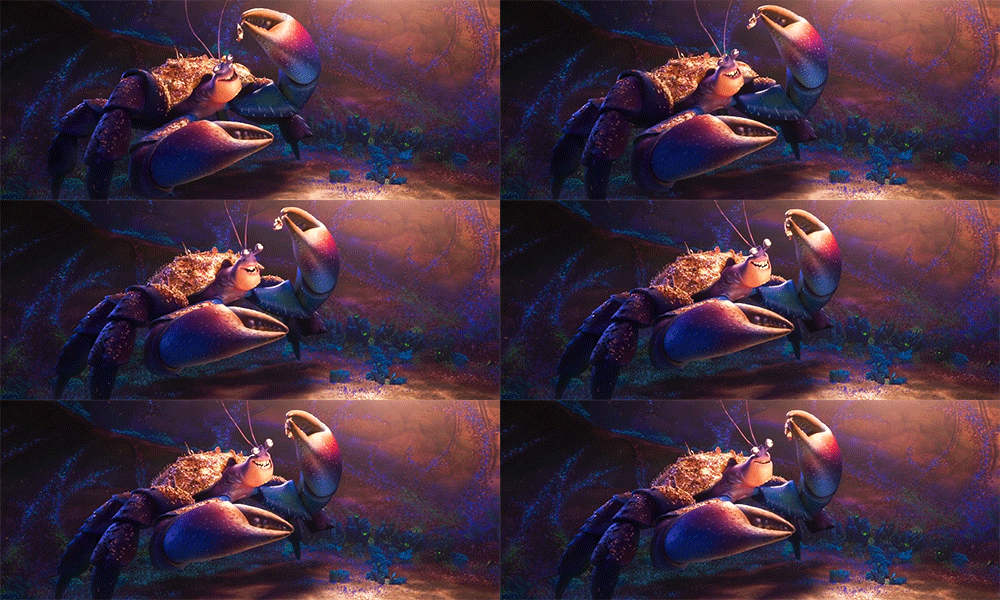
09. Tamatoa


The crab is able to beat the crud out of a demigod, which is pretty significant power. But…he’s a giant crab. Super strength can only go so far, and his vanity and laziness put him in a passive role. He could still easily destroy / eat a Gaston-level villain, though. So he gets a nod.

08. Madam Mim


Mim has incredible power of transformation – but she only uses it in a very limited way. Even when she uses her anamorphic skills to become a dragon her shortsightedness still undoes her. Lacking ambition, creativity, and other traits, restricts her. Could probably take Tamatoa, though.

07. Ursula


Ursula has phenomenal power once she achieves the power of the trident. But she’s significantly handicapped – she only has control over the ocean, and while storms and gigantism are not nothing…she is defeated fairly easily even at the height of her powers. Being water-bound also means easier to escape.

06. Doctor Facilier


Facilier’s sight into the past, and people’s desires, is tremendous. He also seems to possess a number of smaller magical abilities – but they all come at too steep a price. Being tied to his magical talisman, he is vulnerable. Further need of support for these gifts, which can be (and are) rescinded makes him only as powerful as his ‘friends’ will allow.

05. Maleficent


No need for spells or items of power here. Maleficent has incredible dark magic within her - she can control whole kingdoms, transform into a dragon, and summon her army of (stupid) demons. More impressive – she is not sidetracked. No distractions: she doesn’t let vanity, laziness, or a lust for power blind her from her purposes and goals.

04. Chernabog


He’s limited in a couple of critical ways – he only has power of the dead for a single night of the year – which is phenomenal, but also, seemingly, he's geographically hampered by his need to stay on his mountain. And then, you know, dawn. Since he’s only a conscious, empowered entity for that one eve, though, he could probably take most comers, even Maleficent, when he’s alive.

03. The Horned King


What’s better than controlling the dead for a night? Controlling them for longer than a night! Assuming he steered clear of Chernabog that one night, he could wreak havoc and rule the land with his undead army for the rest of the year. He would be difficult to oppose, although he is constrained by his item – the necromancer’s black cauldron. Still…compared to singing nuns and dawn…

02. Jafar


“The universe is mine to command! To control!” With universe-wielding might, Jafar-as-genie is the most powerful villain in terms of outright capacity. The servitude – the cuffs on the wrist – are what limits him. In the right hands he could destroy essentially any enemy. But in the hands of another he can only use his powers for their beneficent purposes, hamstringing his villainous nature. And, you know, itty bitty living space.

01. Hades


As a literal god Hades is pretty difficult to beat in a fair fight. He suffers from Movie Villain Syndrome, true (why not destroy Hercules by sending all of your beasties at once?) Yet he is a pretty good strategist, for example, using the Titans to help with his overthrow of Olympus. His literal hot temper is a drawback, but not a significant one. He gets very close to achieving his goal. Only another godlike power can vanquish him, making him the most powerful of Disney villains.

Friday, February 17, 2017

Nanami: Inferno of First Love Review

Ending first: I destroyed this film after watching it.

Beginning: I like art house films. I teach Film Studies. Constantly I am plumbing the depths of foreign cinemas – African cinema, Asian, European. And as such I often use lists and guides to help me find things.

A friend told me about “patrician” films – snootiness that implies others are plebs. But when checking out these lists I realized, despite my Criterion and art house credentials, that I’d seen very few. So I took one of the lists he sent me, and began investigating. Here is that list:


Now, over the past year or so, many of these films I’ve now seen have been genuinely intriguing. Some I’d seen before: ‘Black Orpheus’, ‘The Lost Weekend’. ‘I Am Cuba’ and ‘Mother and Son’ were new – and had great cinematography. ‘The Steel Helmet’ had not aged well, but it sticks with you. Others were just the other side of cult: ‘Putney Swope’ and ‘Pink Flamingoes’. However, as I delved further into the list, one title I could find very little about: ‘Nanami: Inferno of First Love’.

So I looked on eBay. I found someone selling a copy, bought it, and watched it.

Let’s start off the bat with our protagonist, named Shun, whom I will dub Captain Sadsack. Sadsack meets a young girl in a cheap hotel who quickly undresses. So far so normal – I’m thinking of ‘Belle Du Jour’ and ‘Cleo from 5 to 7’. Prostitution has always been a fascination of the New Wave, and this film, being Japanese New Wave, starts off no different.

Of course he’s a virgin. Of course she’s a nude model. And of course he doesn’t get anywhere because he’s too shy. All standard coming-of-age plot stuff. Sadsack tells us his backstory, and now the film begins to pile on: he was an orphan, and is a journeyman goldsmith apprenticed to his foster-ish parents, and his “father” has molested him since childhood. He also takes laughing lessons.

We aren’t at the five-minute mark, yet. Already I’m thinking, “Why did I spend money on this?”

Then we find out, of course!, that his only friend is a five-year old girl. He is hoping the prostitute he’s telling all this to will be his second friend.

Why is a five-year old his friend? Because his only form of enjoyment is feeding pigeons in the park, where he sometimes sees her. I remind you that this boy is in his late-teens, not a cute old granddad. If he’d been a cute granddad perhaps I’d have been cheering him on.

Also he may have been drawn to pigeons because those were his only friends as a child. It’s unclear. What is clear is that this movie is crap. We are now only ten minutes in.

Anyway. So Captain Sadsack is hanging out in a graveyard with the five year old because subtlety is for suckers, when the little girl needs to pee. He takes her behind a grave and is spotted, and, not surprisingly, is presumed to be a child predator. Thankfully the deranged director doesn’t show us the girl urinating, but by this point I thought I was prepared for anything.

A Freudian hypnotist (which clearly is what this train wreck was missing) gets him to be more explicit about his molestation-infested childhood. Meanwhile our prostitute with a heart of tarnished brass is doing more exotic photo-shoots of the S&M sort.

Up to this point the film is just bad. It’s schlocky and pretentious, over-the-top and ‘artistic’ in all the wrong ways. Up to this point, it isn’t worth writing up. But – fair warning – it now gets really, legitimately beyond pretentious levels of bad.

Sadsack is back home, and other things probably happened but I can’t claim to care enough to recall. Then he begins to masturbate, but his visions of his prostitute friend fade out and we get still images of young children running around in masks. In various stages of undress.

I paused the film. I went online. I looked up this film, and various synopses. Only a couple, here or there, mentioned this scene. (“One weird scene in particular involves naked children walking around in a cemetery wearing tengu masks. God knows what that's about.”) Which leads me to wonder: what the fuck?

It has a 7.9 on IMDB. Who gives a 7.9 to this garbage?! Who gives it a 4.2/5 on Rotten Tomatoes? The fact that it’s “art” doesn’t really excuse exploitation, at least not for me.

Once I’d read the synopses and was sure there weren’t going to be any more surprises I finished the film. Unfortunately the ending is supposed to be a shocking twist, which, by checking to make sure there weren’t going to be more naked kids, was essentially ruined. Long story short: The Captain decides to leave his awful foster situation, falls truly in love with the prostitute who loves him in return, and right before he meets her at the hotel to consummate what he’d been unable to previously, he gets hit by a car and dies because OF COURSE HE DOES. The end.

Up to the creepy kids I’d already come to the conclusion I was going to take the DVD and sell it to one of the used DVD stores in town, which, this being Berkeley, there are many. But, frankly, I don’t want people to see this film, and, worryingly, I wonder if the market for it doesn’t include real creeps.

So instead I destroyed it.

Maybe it is art. Maybe I’m an uncultured heathen and my reaction shows just how petty and bourgeois, what an unsophisticated “plebeian” I am. I just feel more comfortable knowing that it’s not out there. And I hope this review may be found by others and serve as a warning that this film is of no real cinematic value. Should every existing copy be destroyed? No, probably not. But mine is, and I can’t help but feel the world is better off for it.

Monday, February 13, 2017

Stand-Up Round-Up

These are in no order whatsoever. We could all use a little cheering up right now, though, so here are fifteen of my favorites (many NSFW). I would argue each represents some of that comedian's best material. 

Enjoy.

Lewis Black – IHOP


Eddie Izzard – Engelbert Humperdinck


Robin Williams – Last Ten Years


George Carlin – Reagan’s Gang


Patton Oswalt – KFC Part Two


Louis CK – SNL Monologue


Bob Newhart – Abe Lincoln vs Madison Avenue


Chris Rock – Black People


The Smothers Brothers – Mom Always Liked You Best


Richard Pryor – Burn


Steve Martin – Fun Balloon Animals


Bill Hicks – Marketing


Mitch Hedberg – Donut


Greg Proops – America is England’s Fault


Dara O'Briain - Homeopathy


Friday, January 27, 2017

Mary Tyler Moore and the Mark Twain Prize

In 2010 I came up with a list of folks who should get the Mark Twain Prize. In 2011 I argued certain comedians should have gotten the award before Will Ferrell. As a lifetime achievement award, it cannot be posthumously given, and some of these folks are old, and Ferrell (if he deserves it) was only 44 when he got it.

Since then, silence. So, in brief: I was glad to see Bill Murray get it this past year for 2016. Indifferent to Eddie Murphy’s 2015 win. Not so glad to see Jay Leno receive it in 2014. Very happy to see Carol Burnett (who had been on my list in 2010) get the award in 2013. Indifferent to Ellen DeGeneres’ 2012 win.

Mary Tyler Moore had been on my original lists, and I find it somewhat tragic she did not get the award (especially before Jay Leno or, again, Will Ferrell). 

Others from my list have been lost along the way as well, such as Joan Rivers, Sid Caesar, and Robin Williams. So I decided to update and expand the list to 15:

1.      Betty White, 95. I mean, come on. She’s been around longer than anyone has iconic status for good reason.

2.      Dick Van Dyke, 91. He is so talented – one of the great physical comedians. The plots of The Dick Van Dyke Show were clever, and he was always so sincere. And Mary Poppins!

3.      Mel Brooks, 90. Blazing Saddles, Young Frankenstein, The Producers. The man worked with Sid Caesar and won an EGOT.

4.      Mort Sahl, 89. He wrote jokes for Kennedy. I know his work afterwards (he has doubts about the assassination) is problematic – but this award would be a great way to bury the hatchet. The guy practically invented modern stand-up comedy.

5.      Tom Lehrer, 88. He wants to be remembered for mathematics, and that’s nice and all, but his comedy recordings are part of the National Recording Registry, and his math isn’t.

6.      Dick Gregory, 84. Admittedly, I suppose most people haven’t thought much about Gregory since the 60s, when he was on fire as a great envelope-pushing comedian. Really, he’s the only one who used it as a form of activism in the Civil Rights era, which is pretty remarkable.

7.      The Smothers Brothers, 79+77. After a string of noteworthy comedy albums they got their own show, The Smother Brothers Comedy Hour, which helped change the comedic landscape of television.

8.      Garrison Keillor, 74. Honestly? Not a huge fan. But I would respect his induction as a uniquely American comedic voice for the residents of Lake Woebegone.

9.      Matt Groening, 62. The Simpsons, alone. But let’s not forget the off-beat Life in Hell or Futurama. And he got Conan O’Brien started.

10.  Harvey Fierstein, 62. A pretty big force in Broadway’s comedy world. His play La Cage Aux Folles successfully crossed into film and Kinky Boots won Best Musical. And Hairspray proved his acting chops.

11.  Julia-Louis Dreyfus, 56. She started out on SNL, then Seinfeld (which I don’t like, but whatever), and kept her career going with Veep. All earning a record *twenty-two* Emmy nominations.

12.  Jon Stewart, 54. Basically changed how media, news, and television works. Fought an eight year crusade against George W. Bush and spawned Samantha Bee, John Oliver, and Stephen Colbert.

13.  Janeane Garofolo, 52. Remember the 90s? Remember when Garofolo was the coolest new comedian on the block?

14.  Chris Rock, 51. He’s had a great standup career. His television and movie work is mixed, but usually he’s one of the highlights of whatever he’s in.

15.  Louis C.K, 49. Admittedly, C.K. is my only under-50 comedian, just because he has been so very influential in such a short period of time. There’s a reason he consistently ranks as one of the best standup comedians out there, and his show Louie was sufficiently incredible to win a Peabody.

Of special note – there are a bunch of great female comedians out there today, and, if we’re going to break the rules, you could easily swap my 15th, Louis C.K., for Amy Poehler, Sara Silverman, Margaret Cho, Tig Notaro, or many others. It’s sad that Joan Rivers, Phyllis Diller, and especially Mary Tyler Moore (and many others) didn’t get the award while they were alive – the trailblazing comedians who made it possible for the rising generation of women in comedy. (Luckily a few have, Whoopi Goldberg, Lily Tomlin. But there’s a big age gap between them and the new guard.)